


Drainage Canal Molds
Your Professional Drainage Canal Molds Supplier
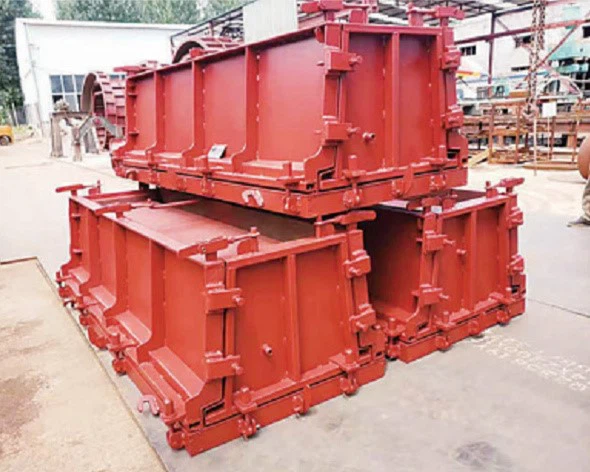
The company is committed to providing high-quality cement product molds for many enterprises at home and abroad. Over the years, with a professional technical team, strict quality control and unremitting pursuit of innovation, it has established a good reputation in the industry.It has successively produced: cement pipe molds, septic tank molds, inspection well molds, retaining wall molds, box culvert molds, bridge slab molds, rainwater collection well molds, cable trench and canal molds, and various special-shaped component molds.
-
![Rectangular Groove Mold]() Rectangular Groove MoldThe Rectangular groove mold is a key type of drainage trench mold, primarily used to produce precast rectangular drainage channels. Constructed from high-quality engineering plastics or steel,...read more
Rectangular Groove MoldThe Rectangular groove mold is a key type of drainage trench mold, primarily used to produce precast rectangular drainage channels. Constructed from high-quality engineering plastics or steel,...read more -
![U-shaped Groove Mold]() U-shaped Groove MoldThe U-Shaped Groove Mold is a specialized forming system for manufacturing precast U-shaped drainage or irrigation channels. Constructed from high-strength steel or engineering-grade plastics,...read more
U-shaped Groove MoldThe U-Shaped Groove Mold is a specialized forming system for manufacturing precast U-shaped drainage or irrigation channels. Constructed from high-strength steel or engineering-grade plastics,...read more -
![Canal Mold]() Canal MoldCannl molds are specialized tools for manufacturing precast channel components of various shapes and specifications. Their design and production integrate functional requirements, hydraulic...read more
Canal MoldCannl molds are specialized tools for manufacturing precast channel components of various shapes and specifications. Their design and production integrate functional requirements, hydraulic...read more -
![Flume Mold]() Flume MoldFlume molds are specialized tools for manufacturing precast concrete channel components of various configurations. Engineered with hydraulic performance, structural integrity, and durability...read more
Flume MoldFlume molds are specialized tools for manufacturing precast concrete channel components of various configurations. Engineered with hydraulic performance, structural integrity, and durability...read more -
![Farmland Irrigation Canal Mold]() Farmland Irrigation Canal MoldDesigned for farmland irrigation, emphasizing water-saving, leak-proofing, and terrain adaptability. Compatible with border / check / sprinkler / drip irrigation to enhance efficiency.read more
Farmland Irrigation Canal MoldDesigned for farmland irrigation, emphasizing water-saving, leak-proofing, and terrain adaptability. Compatible with border / check / sprinkler / drip irrigation to enhance efficiency.read more


Why Choose Us
Quality Assurance
For more than 20 years, the company has always adhered to innovation and development, continuously introduced advanced production technologies and equipment to improve production efficiency and product quality.
Production Equipment
Equipment produced by the company is Laser cutting machine, lathe, milling edge machine, milling machine, plate rolling machine, round rolling machine, bending machine, shearing machine, press machine, welding machine, sawing machine, wire cutting, plasma cutting.
Production Market
The company In China, it covers the eastern, central, western and northeastern regions. Internationally, products are exported to Asia, Africa, Europe and other places.
Our Service
Our team of experts will recommend the most suitable products according to customer needs and provide detailed consultation, we ensure timely delivery, and we provide long-term service support.
Advantages of Drainage Canal Molds
Reduces maintenance costs
They help prevent the need for costly repairs that can result from water damage.
Cost-effective
Depending on the material, they can be a more affordable and efficient solution compared to other drainage methods, especially when accounting for long-term maintenance and repairs.
Durable
Many materials used for molds, like stainless steel or polymer concrete, are designed to be long-lasting and resistant to corrosion.
Paramenters
|
Parameter |
Technical Index |
Remarks |
|
Output |
Plastic: 10-30 piece/day |
Varies by process / size |
|
Demolding Cycles |
Plastic: ≥500 Secondary |
Proper maintenance extends lifespan |
|
Strength |
≥20MPa |
Withstands overburden / traffic loads |
|
Tolerance |
Length/width ±2mm, height ±3mm |
Laser-calibrated precision |
Efficient Casting Process of Drainage Canal Molds
Pouring Technique
When pouring the concrete into the mold, use a slow and steady pouring technique. This helps prevent air bubbles from forming in the concrete, which can weaken the cast. Start pouring from one end of the mold and gradually move towards the other end.
Vibration
Use a vibrator to remove any air bubbles trapped in the concrete. Vibrating the mold during the pouring process helps the concrete settle evenly and fill all the corners of the mold. However, be careful not to over - vibrate as this can cause segregation of the concrete mix.
Curing
Proper curing is essential for the strength and durability of the cast drainage canal. Follow the recommended curing time and conditions for the concrete mix you are using. This may involve covering the cast with a plastic sheet to retain moisture or using a curing compound.
Proper Mold Preparation of Drainage Canal Molds
Cleaning
Before each use, thoroughly clean the mold to remove any debris, dirt, or residual concrete from previous casts. Use a wire brush or a high - pressure water jet to ensure a clean surface. A clean mold not only improves the quality of the cast but also extends the mold's lifespan.
Lubrication
Apply a suitable lubricant to the mold surface. This helps prevent the concrete from sticking to the mold, making it easier to remove the cast canal once it has cured. There are various types of lubricants available, such as silicone - based or mineral - oil - based lubricants. Choose a lubricant that is compatible with the mold material and the concrete mix.
Inspection
Inspect the mold for any signs of damage, such as cracks, dents, or warping. Minor damages can often be repaired, but significant damage may require replacing the mold. Regular inspection helps identify potential problems early and prevents costly delays during the casting process.
Considerations For Drainage Canal Molds Construction
The importance of drainage ditch mold construction for highway construction is self-evident. During the rainy season, prolonged heavy rain can cause significant water accumulation on roads. If water cannot be drained promptly, the roads become submerged in sewage, degrading their quality and hindering vehicular traffic. Therefore, highway drainage has always been a high priority.
Previous construction methods suffered from numerous drawbacks, such as easy clogging and difficulty in clearing. These issues led to poor drainage and substandard construction. To address these issues, mold construction has now been adopted.
Drainage ditch mold construction is a prefabricated method suitable not only for highway drainage but also for other areas such as farmland improvement. During construction, workers must adhere to correct techniques, especially careful attention to detail when grouting. Prefabricated irrigation channels come in a variety of sizes, ranging from 20 centimeters to 2 meters, and can all be produced using molds. However, improper operation can result in poor grouting and substandard construction.
Prefabricated drainage ditches are typically constructed below ground level. This allows for better drainage and prevents problems such as water accumulation. At the same time, drainage ditches also serve as a foundational component of highway and farmland infrastructure, ensuring their quality.
During mold construction, the following points should be considered. First, select a high-quality mold, ensuring its size and shape meet the required requirements. Second, pay attention to the proportions and material selection during grouting to ensure quality and strength. Finally, clean and maintain the mold promptly after construction to ensure future use.
FAQ
We're well-known as one of the leading drainage canal molds manufacturers in China. Please feel free to buy bulk high quality drainage canal molds made in China here from our factory. For customized service, contact us now.
Farmland Irrigation Canal Mold, drainage canal molds, Canal Mold