

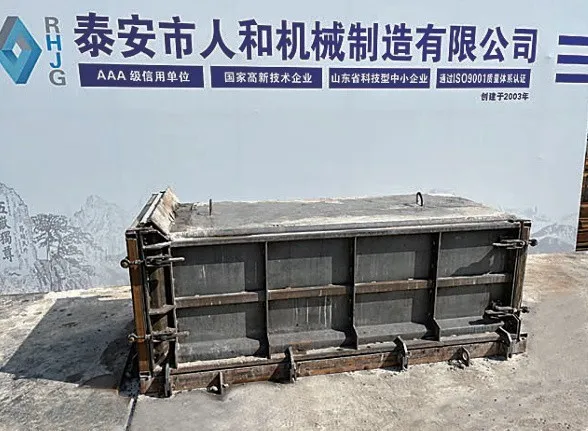
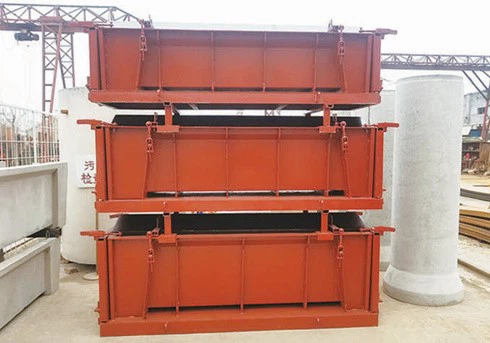
As a supplier of Arched Cable Trench Molds, I often receive inquiries from clients about the applicability of our molds in complex terrains. This topic is not only crucial for our customers but also highly relevant to the efficiency and cost - effectiveness of cable trench construction projects. In this blog, I will delve into the question: Can an Arched Cable Trench Mold be used in complex terrain?
Understanding Complex Terrains
Complex terrains can be characterized by various factors such as uneven ground, slopes, rocky surfaces, and areas with high water tables. These terrains pose unique challenges to construction projects, including cable trench construction. For instance, on sloped terrains, the stability of the trench and the mold becomes a major concern. Rocky surfaces can make it difficult to install the mold properly, and high water tables may lead to issues like water seepage and soil erosion.
Advantages of Arched Cable Trench Molds in Complex Terrains
- Structural Stability
The arched design of the cable trench mold provides excellent structural stability. In complex terrains, especially on slopes, the arch shape distributes the weight evenly, reducing the risk of collapse. The arch can withstand lateral pressure from the surrounding soil, which is particularly important in areas where the soil may shift due to natural factors such as heavy rainfall or seismic activity. - Adaptability to Uneven Ground
Arched cable trench molds can be more adaptable to uneven ground compared to other types of molds. The flexibility of the arch allows it to conform to the natural contours of the terrain to some extent. This means that less ground leveling is required, which can save time and cost in construction. For example, in hilly areas, the arched mold can follow the undulations of the land without the need for extensive excavation and backfilling. - Water Management
In areas with high water tables or prone to flooding, the arched shape of the cable trench can help with water management. The arch design allows water to flow more smoothly through the trench, reducing the risk of water accumulation. This is crucial for protecting the cables from water damage, which can lead to electrical failures and costly repairs.
Challenges and Solutions
- Installation on Rocky Surfaces
One of the main challenges of using an arched cable trench mold in complex terrains is the installation on rocky surfaces. Rocks can prevent the mold from being properly seated and may cause damage to the mold. To overcome this challenge, a preliminary site survey should be conducted to identify the location of rocks. If possible, the rocks can be removed or blasted. In some cases, a layer of crushed stone or gravel can be placed under the mold to provide a more stable base. - Slope Stability
On sloped terrains, ensuring the stability of the mold and the trench is essential. Special measures may need to be taken, such as installing anchors or retaining walls to prevent the mold from sliding down the slope. Additionally, the angle of the slope should be carefully considered during the design and installation process. For steeper slopes, the arch design may need to be adjusted to provide additional support. - Soil Conditions
Different soil conditions can also affect the performance of the arched cable trench mold. For example, in soft or sandy soils, the mold may sink or shift. In such cases, soil stabilization techniques, such as soil compaction or the use of geotextiles, can be employed to improve the soil's bearing capacity.
Comparison with Other Types of Cable Trench Molds
- Precast Cable Trench Mold
Precast Cable Trench Mold offers the advantage of pre - fabricated components, which can be quickly installed on - site. However, in complex terrains, the precast sections may not fit as well as an arched cable trench mold. The precast molds are often more rigid and may require more precise ground preparation. The arched mold, on the other hand, can better adapt to the natural shape of the terrain. - Rectangular Cable Trench Mold
Rectangular Cable Trench Mold is a common choice for cable trench construction. While rectangular molds are easy to manufacture and install in flat terrains, they may not be as suitable for complex terrains. The sharp corners of the rectangular mold can make it more difficult to adapt to uneven ground, and the structural stability may be compromised on slopes. The arched cable trench mold, with its smooth curve, provides better load - distribution and adaptability.
Real - World Applications
There have been numerous successful projects where arched cable trench molds have been used in complex terrains. For example, in a mountainous region where the terrain was highly uneven and rocky, an arched cable trench mold was used to construct a cable trench for a power transmission project. The arch design allowed the mold to be installed with minimal ground preparation, and the structural stability of the arch ensured the long - term integrity of the trench.
Conclusion
In conclusion, an Arched Cable Trench Mold can indeed be used in complex terrains. Its structural stability, adaptability to uneven ground, and water management capabilities make it a viable option for cable trench construction in challenging environments. However, it is important to address the specific challenges associated with complex terrains, such as installation on rocky surfaces, slope stability, and soil conditions.
If you are considering a cable trench construction project in a complex terrain, I encourage you to contact us for more information. Our team of experts can provide you with detailed advice on the suitability of our arched cable trench molds for your project and assist you in the procurement process. We are committed to providing high - quality molds that meet your specific needs and ensure the success of your project.
References
- Smith, J. (2018). "Cable Trench Construction in Challenging Terrains." Construction Journal, 25(3), 45 - 52.
- Johnson, A. (2019). "Structural Design of Arched Cable Trench Molds." Engineering Review, 32(2), 67 - 74.
- Brown, C. (2020). "Water Management in Cable Trench Construction." Infrastructure Magazine, 18(4), 23 - 30.