

As a supplier of turnover machines, I often encounter questions from potential customers about whether operating a turnover machine requires special training. This is a crucial question that can significantly impact the efficiency, safety, and overall performance of the equipment. In this blog post, I will delve into this topic, exploring the factors that determine the need for special training and providing insights to help you make an informed decision.
Understanding Turnover Machines
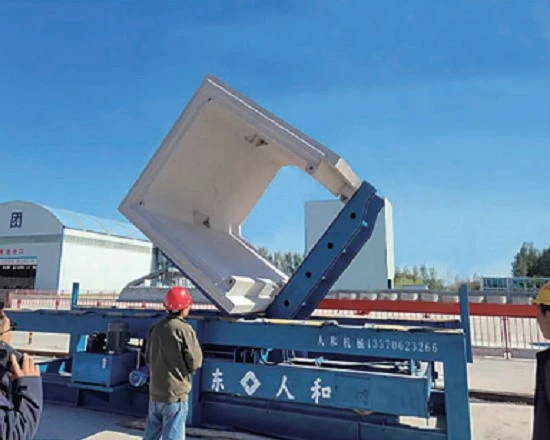
Before discussing the need for special training, it's essential to understand what turnover machines are and their functions. Turnover machines are industrial equipment designed to rotate or flip heavy objects, such as large components, prefabricated structures, or hydraulic cement products. They are commonly used in various industries, including manufacturing, construction, and logistics, to facilitate material handling, assembly, and transportation processes.
There are different types of turnover machines available in the market, each with its own features and capabilities. For example, the 180-degree Turnover Machine is specifically designed to rotate objects by 180 degrees, which is useful for tasks such as turning over large panels or components during the manufacturing process. The Prefabricated Turnover Machine is tailored for handling prefabricated structures, allowing for efficient assembly and transportation. And the Hydraulic Cement Turnover Machine is designed to handle heavy cement products, ensuring safe and precise turnover operations.
Factors Determining the Need for Special Training
The need for special training to operate a turnover machine depends on several factors, including the complexity of the machine, the nature of the tasks, and the operator's experience and skills.
Machine Complexity
Some turnover machines are relatively simple and easy to operate, while others are more complex and require a higher level of technical knowledge and skills. For example, a basic turnover machine with manual controls may be straightforward to operate, and an operator with some general mechanical knowledge can quickly learn how to use it. However, more advanced turnover machines, such as those with automated controls, hydraulic systems, or complex programming, may require specialized training to ensure safe and efficient operation.
Task Requirements
The nature of the tasks performed with the turnover machine also plays a significant role in determining the need for special training. If the tasks involve handling heavy or delicate objects, precise positioning, or complex operations, special training may be necessary to ensure that the operator can perform the tasks safely and accurately. For example, when using a turnover machine to handle prefabricated structures, the operator needs to understand how to properly secure the objects, adjust the machine's settings for different sizes and weights, and perform the turnover operation without causing damage to the structures.

Operator Experience and Skills
The operator's experience and skills are also important factors to consider. If the operator has prior experience with similar equipment or has received training in related fields, they may be able to learn how to operate the turnover machine more quickly and easily. However, if the operator is new to the industry or has limited experience with industrial equipment, special training may be necessary to ensure that they have the knowledge and skills required to operate the machine safely and effectively.
Benefits of Special Training
Even if a turnover machine is relatively simple to operate, providing special training to operators can offer several benefits.
Safety
Safety is the top priority when operating any industrial equipment, and turnover machines are no exception. Special training can help operators understand the potential hazards associated with the machine and learn how to take appropriate safety measures to prevent accidents. For example, training can cover topics such as proper machine setup, safe handling of objects, and emergency procedures.
Efficiency
Proper training can also improve the efficiency of the turnover machine operation. Operators who are trained to use the machine correctly can perform tasks more quickly and accurately, reducing downtime and increasing productivity. Training can also help operators optimize the machine's settings and functions, ensuring that it operates at its maximum efficiency.
Equipment Maintenance
Special training can also teach operators how to perform basic maintenance tasks on the turnover machine, such as lubrication, inspection, and minor repairs. This can help extend the lifespan of the machine and reduce the need for costly repairs and downtime.
How to Provide Special Training
If you decide that special training is necessary for your turnover machine operators, there are several ways to provide it.
Manufacturer Training
Many turnover machine manufacturers offer training programs for their customers. These programs are typically conducted by experienced technicians who are familiar with the specific machine models and can provide in-depth training on its operation, maintenance, and safety features. Manufacturer training can be a great option as it ensures that the operators receive accurate and up-to-date information about the machine.
In-house Training
You can also provide in-house training for your operators. This can be done by experienced employees or by hiring a professional trainer. In-house training allows you to customize the training program to meet the specific needs of your business and operators.
Online Training
Online training courses are another option for providing special training. These courses are often self-paced and can be accessed from anywhere with an internet connection. Online training can be a convenient and cost-effective way to provide training to a large number of operators.
Conclusion
In conclusion, whether a turnover machine requires special training to operate depends on several factors, including the complexity of the machine, the nature of the tasks, and the operator's experience and skills. While some turnover machines may be relatively simple to operate, providing special training to operators can offer significant benefits in terms of safety, efficiency, and equipment maintenance. As a supplier of turnover machines, I recommend that you carefully assess your needs and the capabilities of your operators to determine whether special training is necessary. If you have any questions or need further information about our turnover machines or training programs, please feel free to contact us for a consultation. We are committed to providing our customers with high-quality products and services to help them achieve their business goals.
References
- General knowledge about industrial equipment operation and safety.
- Industry standards and best practices for turnover machine operation.