

Hey there! As a Pipeline Mold supplier, I've seen firsthand how crucial the mold release agent is for both the pipeline mold and the final product. Let's dive into how it impacts these two aspects.
Impact on the Pipeline Mold
1. Protection of the Mold Surface
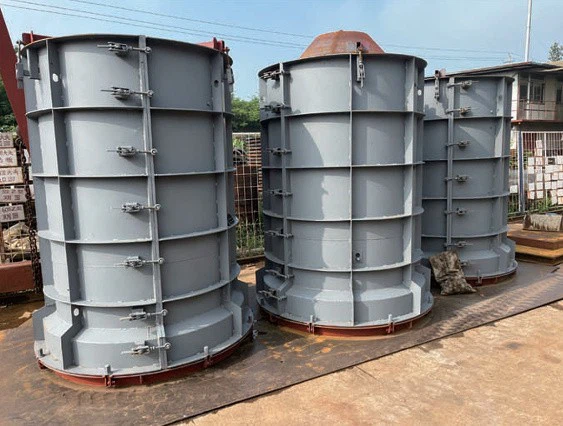
The mold release agent acts as a protective barrier between the mold and the material being molded. When we're working with pipeline molds, like the ones you can find at Pipeline Mold, the agent prevents the material from sticking directly to the mold surface. This is super important because constant sticking can cause abrasion and wear on the mold. For example, in the production of cement pipes using Cement Pipe Mold, the cement can be quite sticky. Without a proper release agent, the repeated removal of the hardened cement pipe from the mold can scratch and damage the mold's surface. Over time, this can lead to a decrease in the mold's precision and lifespan.
2. Ease of Demolding
One of the most obvious effects of a good mold release agent is how it makes the demolding process a breeze. When we use a high - quality release agent on our Roller Suspension Pipe Mold, the pipe can be easily removed from the mold. This not only saves time but also reduces the risk of damaging the mold during demolding. If the release agent isn't effective, workers may have to use excessive force to remove the product from the mold. This can cause dents or cracks in the mold, which can then affect the quality of subsequent products.
3. Cleaning and Maintenance
A proper mold release agent can also simplify the cleaning and maintenance of the pipeline mold. After the product is removed, the mold surface is left relatively clean. This means that less time and effort are required to clean the mold between production runs. For instance, if the release agent forms a thin, even film on the mold surface, it can prevent the buildup of residue. This makes it easier to wipe off any remaining material and keep the mold in good condition.
Impact on the Product
1. Surface Finish
The mold release agent plays a huge role in determining the surface finish of the pipeline product. A well - applied release agent can result in a smooth and defect - free surface. When the product is released from the mold easily, there's less chance of surface imperfections such as roughness, pitting, or tearing. For example, in the case of plastic pipeline production, a good release agent can give the pipe a shiny and professional appearance. This is important for both the aesthetic appeal and the functionality of the product, as a smooth surface can reduce friction and improve the flow of fluids through the pipe.
2. Product Integrity
Using the right mold release agent helps maintain the integrity of the pipeline product. If the release agent doesn't work properly, the product may get damaged during demolding. This can lead to cracks, breaks, or other structural issues. For example, in the production of large - diameter pipes, any damage during demolding can compromise the strength and durability of the pipe. A reliable release agent ensures that the product is removed from the mold without any internal or external damage, ensuring that it meets the required quality standards.

3. Product Consistency
Consistency is key in pipeline production. A good mold release agent helps ensure that each product coming out of the mold is of the same quality. It provides a consistent release performance, which means that the shape, size, and surface finish of the products are uniform. This is crucial for industries where precision is required, such as in the construction of sewage systems or water supply networks.
Choosing the Right Mold Release Agent
When it comes to choosing a mold release agent for pipeline molds, there are several factors to consider. First, you need to think about the type of material you're using for the pipeline. Different materials, such as cement, plastic, or metal, may require different types of release agents. For example, cement pipes may need a release agent that can withstand the high alkalinity of cement, while plastic pipes may need a release agent that doesn't react with the plastic.
Another important factor is the operating conditions. If the mold is used in a high - temperature environment, you need a release agent that can withstand the heat without breaking down. Similarly, if the production process involves high - pressure molding, the release agent should be able to maintain its effectiveness under pressure.
It's also a good idea to test different release agents on a small scale before using them in large - scale production. This can help you determine which agent works best for your specific pipeline mold and product requirements.
Conclusion
In conclusion, the mold release agent has a significant impact on both the pipeline mold and the final product. It protects the mold, makes demolding easier, simplifies cleaning, and improves the surface finish, integrity, and consistency of the product. As a Pipeline Mold supplier, I highly recommend choosing the right mold release agent for your specific needs. If you're in the market for high - quality pipeline molds like Cement Pipe Mold, Roller Suspension Pipe Mold, or Pipeline Mold, and want to discuss the best mold release agents for your production, don't hesitate to reach out for a procurement discussion.
References
- Mold Technology Handbook, various editions
- Journal of Plastic and Rubber Molding Technology
- Industry reports on pipeline production and mold usage