

As a seasoned supplier of Cement Pipe Molds, I understand the critical importance of ensuring the quality of these molds. A high - quality cement pipe mold not only guarantees the production of durable and well - formed cement pipes but also significantly impacts the efficiency and cost - effectiveness of the manufacturing process. In this blog, I will share some key methods on how to check the quality of a cement pipe mold.
1. Material Inspection
The material of a cement pipe mold is the foundation of its quality. High - grade materials are essential for withstanding the high pressure, wear, and corrosion during the cement pipe manufacturing process.
1.1 Material Grade
First, check the grade of the steel used in the mold. For example, in the production of Cement Pipe Mold, high - strength alloy steels are often preferred. These steels have excellent mechanical properties, such as high tensile strength and hardness, which can resist deformation and abrasion. You can request the material certification from the manufacturer to verify the steel grade.
1.2 Material Purity
Impurities in the material can weaken the mold's structure. Look for signs of inclusions, such as slag or non - metallic particles on the surface of the mold. These impurities can cause stress concentration points, leading to cracks and premature failure of the mold. A visual inspection under proper lighting can help detect obvious impurities. For more accurate results, advanced testing methods like spectroscopy can be used to analyze the chemical composition of the material.
2. Dimensional Accuracy
Dimensional accuracy is crucial for a cement pipe mold as it directly affects the size and shape of the produced cement pipes.
2.1 Overall Dimensions
Measure the overall length, width, and height of the mold using precision measuring tools such as calipers and micrometers. The measured values should match the design specifications within an acceptable tolerance range. For example, if the design length of a Socket - and - Spigot Cement Pipe Mold is 2000mm, the actual length should be within ± 1mm.
2.2 Inner and Outer Diameters
For pipe - shaped molds, the inner and outer diameters are of particular importance. Any deviation in these dimensions can lead to problems such as poor fit between pipes or non - compliance with industry standards. Use specialized measuring devices, like bore gauges for inner diameters and outside micrometers for outer diameters, to ensure accurate measurements.
2.3 Wall Thickness
Uniform wall thickness is essential for the strength and durability of the cement pipes. Check the wall thickness at multiple points around the mold. Variations in wall thickness can cause uneven stress distribution during the manufacturing process, resulting in pipes with weak spots.
3. Surface Finish
A good surface finish on the cement pipe mold is necessary for the smooth production of cement pipes.
3.1 Smoothness
The surface of the mold should be smooth to prevent the cement from sticking during the casting process. A rough surface can cause defects on the surface of the cement pipes, such as pitting or unevenness. You can run your hand gently over the surface to feel for any roughness. For a more precise assessment, a surface roughness tester can be used to measure the surface roughness value.
3.2 Surface Hardness
The surface hardness of the mold affects its wear resistance. A harder surface can better withstand the abrasion caused by the cement mixture. Use a hardness tester, such as a Rockwell or Brinell hardness tester, to measure the surface hardness. The hardness value should meet the requirements specified for the particular type of mold.
3.3 Coating Quality
Some cement pipe molds are coated to improve their corrosion resistance and release properties. Check the quality of the coating by looking for signs of peeling, blistering, or uneven coverage. A well - applied coating should be uniform in thickness and firmly adhered to the mold surface.
4. Structural Integrity
The structural integrity of the cement pipe mold determines its ability to withstand the forces during the manufacturing process.
4.1 Weld Quality
If the mold is assembled by welding, inspect the welds carefully. Good welds should be free of cracks, porosity, and lack of fusion. The weld bead should be smooth and of uniform width. Non - destructive testing methods, such as ultrasonic testing or magnetic particle testing, can be used to detect internal defects in the welds.
4.2 Reinforcement Structure
Many cement pipe molds have reinforcement structures, such as ribs or brackets, to enhance their strength. Check the integrity of these reinforcement structures. Make sure they are properly attached and there are no signs of deformation or damage.
4.3 Overall Stability
Test the overall stability of the mold by applying a moderate amount of force in different directions. The mold should not show any excessive movement or wobbling. A stable mold is less likely to cause problems during the cement pipe manufacturing process.
5. Functionality Testing
In addition to the above inspections, functionality testing is also necessary to ensure that the cement pipe mold can perform its intended function.
5.1 Assembly and Disassembly
Check the ease of assembly and disassembly of the mold. It should be possible to assemble and disassemble the mold quickly and without excessive force. Any difficulties in this process can lead to inefficiencies in the production line.
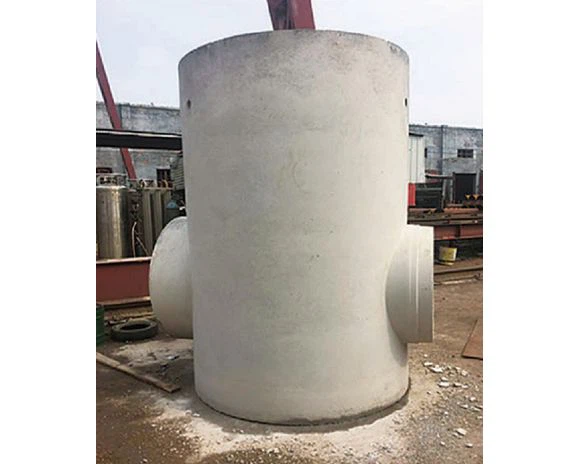

5.2 Casting Test
Conduct a trial casting using the mold. Observe the quality of the produced cement pipes. Look for any defects such as cracks, voids, or improper shape. The pipes should meet the required strength and dimensional standards. Analyze the results of the casting test to identify any potential problems with the mold.
6. Supplier Reputation and After - Sales Service
Finally, consider the reputation of the supplier and the quality of their after - sales service.
6.1 Supplier Reputation
Research the supplier's reputation in the market. Look for customer reviews and testimonials. A supplier with a good reputation is more likely to provide high - quality products. You can also check if the supplier has any industry certifications or awards, which can be an indication of their commitment to quality.
6.2 After - Sales Service
A reliable supplier should offer good after - sales service. This includes providing technical support, spare parts, and warranty services. In case of any problems with the mold, you should be able to get prompt assistance from the supplier.
In conclusion, checking the quality of a cement pipe mold requires a comprehensive approach, covering material inspection, dimensional accuracy, surface finish, structural integrity, functionality testing, and consideration of the supplier's reputation and after - sales service. By following these steps, you can ensure that you get a high - quality Pipeline Mold that meets your production needs.
If you are interested in purchasing high - quality cement pipe molds or have any questions about the quality checking process, please feel free to contact us for further discussion and negotiation. We are committed to providing you with the best products and services.
References
- "Handbook of Mold Design and Manufacturing"
- "Materials Science for Engineers"
- Industry standards for cement pipe molds