

As a supplier of Rectangular Groove Molds, I often get asked about how to test the hardness of these molds. Hardness is a crucial factor as it directly impacts the mold's durability, performance, and lifespan. In this blog, I'll share some practical methods to test the hardness of a rectangular groove mold, so you can ensure you're getting a high - quality product.
Why Hardness Testing Matters
Before we dive into the testing methods, let's understand why hardness testing is so important. A mold with the right hardness can withstand the pressure and wear during the casting process. If the mold is too soft, it may deform easily, leading to inaccurate casting shapes and shorter mold life. On the other hand, if it's too hard, it could become brittle and crack under stress. For our Rectangular Groove Mold, achieving the optimal hardness is key to providing a reliable product for our customers.
Common Hardness Testing Methods
Rockwell Hardness Test
The Rockwell hardness test is one of the most widely used methods in the industry. It's quick and relatively easy to perform. Here's how it works:
A diamond cone or a hardened steel ball is pressed into the surface of the mold under a specific load. The depth of the indentation is then measured. The hardness value is determined based on this depth measurement. This test can be done on different scales, such as the HRA, HRB, and HRC scales, depending on the material of the mold. For our rectangular groove molds, which are usually made of steel or other metals, the HRC scale is often used.
To conduct a Rockwell hardness test on a rectangular groove mold, you'll need a Rockwell hardness tester. First, make sure the surface of the mold is clean and flat. Then, place the mold on the tester's anvil. The tester will apply the initial minor load, followed by the major load. After the major load is removed, the hardness value is read from the tester's dial or digital display.
Brinell Hardness Test
The Brinell hardness test is another popular method. In this test, a hardened steel or carbide ball is pressed into the mold surface under a large load for a specific period, usually 10 - 15 seconds. The diameter of the resulting indentation is measured, and the Brinell hardness number (BHN) is calculated using a specific formula.
The advantage of the Brinell test is that it can provide a more accurate hardness measurement for materials with a coarse - grained structure. However, it leaves a relatively large indentation on the mold surface, which may not be suitable for molds where surface finish is critical. To perform a Brinell hardness test on a rectangular groove mold, you'll need a Brinell hardness tester. The process is similar to the Rockwell test, but with a different indenter and load application.
Vickers Hardness Test
The Vickers hardness test is a more precise method, especially for small - scale or thin - walled molds. A square - based diamond pyramid is pressed into the mold surface under a small load. The diagonal length of the resulting indentation is measured, and the Vickers hardness number (HV) is calculated.
This test is suitable for measuring the hardness of different micro - structures within the mold material. It can also be used to test the hardness of thin coatings on the mold surface. To perform a Vickers hardness test, you'll need a Vickers hardness tester, which is more expensive and requires more skill to operate compared to the Rockwell and Brinell testers.
Factors Affecting Hardness Test Results
Surface Finish
The surface finish of the mold can significantly affect the hardness test results. A rough or uneven surface may lead to inaccurate indentation measurements. Before conducting a hardness test, it's important to ensure that the mold surface is smooth and free of any scratches, rust, or contaminants. You can use a grinding or polishing process to prepare the surface if necessary.
Mold Material Composition
The composition of the mold material also plays a role in the hardness test results. Different alloys and heat - treatment processes can result in different hardness levels. For example, a mold made of high - carbon steel will generally have a higher hardness than one made of low - carbon steel. It's important to know the material composition of the rectangular groove mold before choosing the appropriate hardness testing method.
Test Location
The location where the hardness test is conducted on the mold can also affect the results. The hardness of a mold may vary at different points due to factors such as heat treatment variations, internal stresses, or material inhomogeneities. It's recommended to take multiple hardness measurements at different locations on the mold surface and calculate the average value for a more accurate representation of the mold's hardness.
Our Commitment to Quality
As a supplier of Rectangular Groove Mold, we are committed to providing high - quality products. We use advanced hardness testing methods to ensure that each mold meets our strict quality standards. Our team of experts carefully selects the materials and heat - treatment processes to achieve the optimal hardness for our molds.
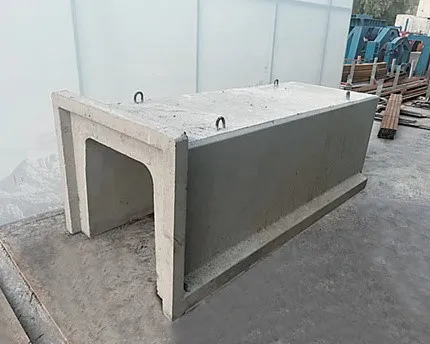
In addition to rectangular groove molds, we also offer Flume Mold and Farmland Irrigation Canal Mold. All of our molds are designed and manufactured with the same attention to quality and performance.
Conclusion
Testing the hardness of a rectangular groove mold is an important step in ensuring its quality and performance. By using methods like the Rockwell, Brinell, and Vickers hardness tests, and considering factors such as surface finish, material composition, and test location, you can get an accurate assessment of the mold's hardness.
If you're in the market for high - quality rectangular groove molds, flume molds, or farmland irrigation canal molds, we'd love to hear from you. We're here to provide you with the best products and services. Contact us to discuss your specific requirements and start a procurement negotiation.

References
- Callister, W. D., & Rethwisch, D. G. (2011). Materials Science and Engineering: An Introduction. Wiley.
- ASTM International. (2018). Standard Test Methods for Rockwell Hardness and Rockwell Superficial Hardness of Metallic Materials. ASTM E18 - 18.
- ASTM International. (2017). Standard Test Method for Brinell Hardness of Metallic Materials. ASTM E10 - 17.
- ASTM International. (2018). Standard Test Methods for Vickers Hardness and Knoop Hardness of Metallic Materials. ASTM E92 - 18.