

Hey there! As a Pipeline Mold supplier, I've seen firsthand the unique requirements that different plastics bring to the table when it comes to pipeline molds. In this blog, I'm gonna break down the differences between pipeline molds for various plastics, so you can get a better understanding of what goes into creating these essential tools.
Polyvinyl Chloride (PVC)
PVC is one of the most commonly used plastics in pipeline manufacturing. It's known for its durability, chemical resistance, and affordability. When it comes to PVC pipeline molds, there are a few key differences to keep in mind.

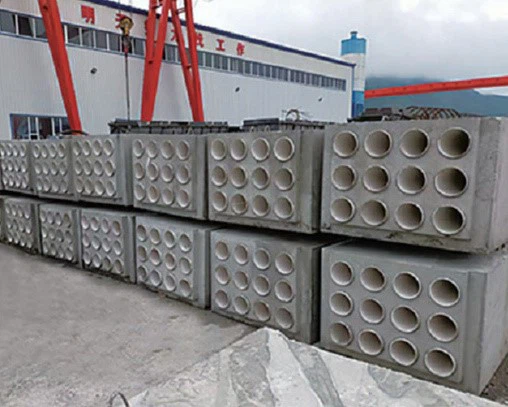
First off, PVC has a relatively low melting point compared to some other plastics. This means that the mold needs to be designed to handle lower temperatures during the molding process. The cooling system in a PVC pipeline mold is also crucial, as it helps to solidify the PVC quickly and evenly. A well-designed cooling system can prevent warping and ensure that the final product has a smooth, consistent surface.
Another important factor is the shrinkage rate of PVC. PVC shrinks as it cools, and the mold needs to be designed to account for this. The dimensions of the mold are typically larger than the desired final product to compensate for the shrinkage. This requires precise calculations and careful design to ensure that the finished pipeline meets the required specifications.
PVC is also a relatively rigid plastic, which means that the mold needs to be able to withstand the pressure exerted during the molding process. The mold walls need to be thick enough to prevent deformation, and the overall structure needs to be sturdy. For more information on PVC pipeline molds, check out our Pipeline Mold page.
Polyethylene (PE)
PE is another popular plastic used in pipeline applications. It's known for its flexibility, impact resistance, and high chemical resistance. Pipeline molds for PE have some distinct differences compared to PVC molds.
PE has a higher melting point than PVC, so the mold needs to be able to handle higher temperatures. The heating system in a PE pipeline mold is designed to reach and maintain the appropriate temperature for melting the PE. This requires a more robust heating element and better insulation to prevent heat loss.
The shrinkage rate of PE is also different from PVC. PE has a higher shrinkage rate, which means that the mold needs to be designed with even more compensation for shrinkage. This can be a challenge, as the shrinkage rate can vary depending on the type of PE and the processing conditions.
PE is a more flexible plastic than PVC, which means that the mold doesn't need to be as rigid. However, the mold still needs to be able to maintain its shape during the molding process. The design of the mold may also need to take into account the flexibility of the PE, such as using a more flexible core or a different type of ejection system.
Polypropylene (PP)
PP is a lightweight and strong plastic that is often used in pipeline applications where weight is a concern. Pipeline molds for PP have their own set of characteristics.
PP has a relatively high melting point, similar to PE. The mold needs to be designed to handle these high temperatures and ensure that the PP is melted and molded properly. The cooling system is also important, as it helps to control the crystallization process of the PP and prevent warping.
The shrinkage rate of PP is similar to PE, but it can also vary depending on the type of PP and the processing conditions. The mold needs to be designed to account for this shrinkage to ensure that the final product meets the required dimensions.
PP is a semi-crystalline plastic, which means that it has different mechanical properties compared to amorphous plastics like PVC. The mold design may need to take into account these properties, such as using a different type of surface finish to improve the release of the PP from the mold.
Socket-and-Spigot Cement Pipe Mold
Socket-and-spigot cement pipe molds are used to create pipes with a socket at one end and a spigot at the other. These molds are typically used for concrete or cement pipes, but they can also be used for other materials.
The design of a socket-and-spigot cement pipe mold is different from a regular pipeline mold. The mold needs to be able to create the socket and spigot features accurately. This requires a more complex mold design, with separate components for the socket and spigot.
The mold also needs to be able to withstand the high pressure and weight of the cement or concrete during the molding process. The walls of the mold need to be thick and strong, and the overall structure needs to be stable. For more information on socket-and-spigot cement pipe molds, check out our Socket-and-Spigot Cement Pipe Mold page.
Roller Suspension Pipe Mold
Roller suspension pipe molds are used to create pipes using a roller suspension process. This process involves rotating the mold while the plastic is being injected or extruded.
The design of a roller suspension pipe mold is different from other types of pipeline molds. The mold needs to be designed to rotate smoothly and evenly, and it needs to be able to support the weight of the plastic and the mold itself. The roller suspension system also needs to be carefully designed to ensure that the pipe is formed correctly.
The cooling system in a roller suspension pipe mold is also important, as it helps to control the temperature of the plastic and prevent warping. The mold may also need to be designed with a special surface finish to prevent the plastic from sticking to the mold during the rotation process. For more information on roller suspension pipe molds, check out our Roller Suspension Pipe Mold page.
Conclusion
As you can see, there are many differences between pipeline molds for different plastics. Each plastic has its own unique properties, such as melting point, shrinkage rate, and flexibility, which require different mold designs. The type of pipeline, such as socket-and-spigot or roller suspension, also affects the mold design.
If you're in the market for a pipeline mold, it's important to work with a supplier who has experience and expertise in designing and manufacturing molds for different plastics. At our company, we have a team of experts who can help you choose the right mold for your specific needs. Whether you're using PVC, PE, PP, or another plastic, we can design and manufacture a high-quality pipeline mold that meets your requirements.
If you have any questions or would like to discuss your pipeline mold needs, please don't hesitate to contact us. We're here to help you find the best solution for your business.
References
- "Plastics Processing Handbook" by George Gogos
- "Mold Design for Plastics" by R. A. Malloy