

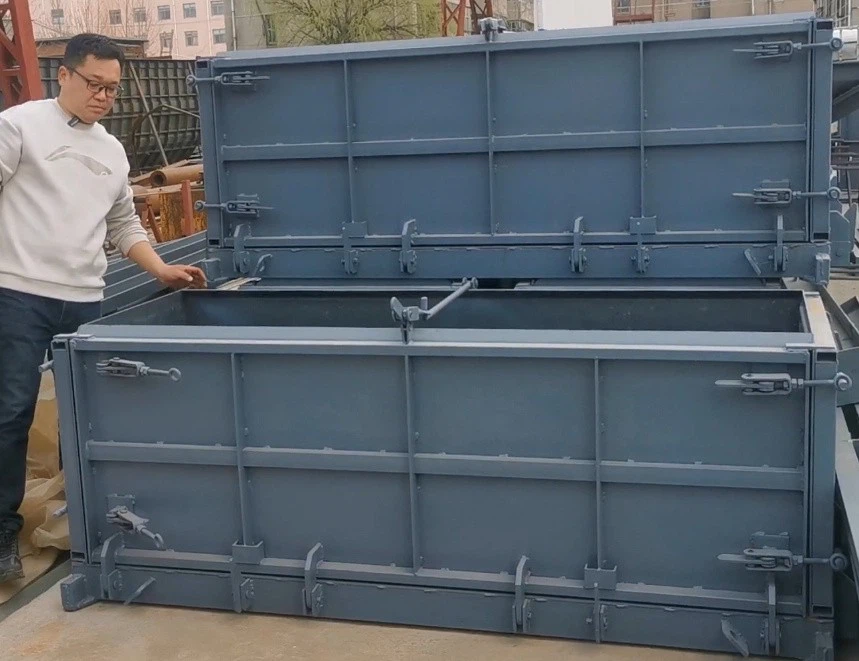
Hey there! As a supplier of Rectangular Groove Molds, I've seen firsthand the ins and outs of these products. While rectangular groove molds have their uses, they also come with a fair share of disadvantages. In this blog post, I'm gonna break down some of the key drawbacks you should know about before making a decision.
1. Limited Flow Efficiency
One of the biggest issues with rectangular groove molds is their relatively poor flow efficiency. Unlike Canal Mold or U-shaped Groove Mold, rectangular grooves have sharp corners. These corners create areas of stagnant water and increased friction, which can slow down the flow of liquids or materials through the groove.
In drainage applications, for example, this can lead to water pooling and increased risk of flooding. When water moves slowly through a rectangular groove, it takes longer to reach its destination, and there's a higher chance of debris getting trapped in the corners. This not only reduces the effectiveness of the drainage system but also requires more frequent maintenance to keep the grooves clear.
2. Difficulty in Cleaning
The sharp corners in rectangular groove molds also make them a pain to clean. Dirt, grime, and other contaminants tend to accumulate in these hard-to-reach areas, and it can be challenging to get a thorough clean. In industrial settings where hygiene is crucial, such as food processing or pharmaceutical manufacturing, this can be a major problem.
Even with regular cleaning, it's often difficult to completely remove all the buildup from the corners of a rectangular groove. This can lead to the growth of bacteria and other microorganisms, which can contaminate the products being processed. In comparison, U-shaped Groove Mold has a smooth, curved surface that is much easier to clean and maintain.
3. Higher Risk of Cracking
Rectangular groove molds are more prone to cracking than other types of molds. The sharp corners create stress concentrations, which can cause the mold to crack under pressure. This is especially true if the mold is made from a brittle material or if it's subjected to repeated use or high temperatures.
Cracks in a mold can not only affect its performance but also pose a safety risk. If a crack occurs during the manufacturing process, it can cause the product to be defective or even lead to a dangerous situation. In addition, repairing a cracked mold can be time-consuming and expensive, which can add to the overall cost of production.
4. Limited Design Flexibility
Another disadvantage of rectangular groove molds is their limited design flexibility. Unlike Canal Mold or U-shaped Groove Mold, which can be customized to fit a variety of applications, rectangular grooves have a more standard shape. This can make it difficult to use them in situations where a unique or specialized design is required.
For example, if you need a groove to fit a specific angle or curve, a rectangular groove mold may not be the best option. In these cases, you may need to consider using a different type of mold or having a custom mold made, which can be more expensive and time-consuming.
5. Higher Material Costs
Rectangular groove molds often require more material to manufacture than other types of molds. This is because the sharp corners and straight sides of a rectangular groove require more material to create a strong and durable mold. In addition, the manufacturing process for rectangular groove molds can be more complex, which can also add to the cost.
Higher material costs can have a significant impact on the overall cost of production, especially if you're using a large number of molds. This can make rectangular groove molds less cost-effective than other types of molds, especially for high-volume production runs.

Conclusion
So, there you have it - some of the main disadvantages of rectangular groove molds. While these molds can be useful in certain applications, it's important to weigh the pros and cons before making a decision. If you're looking for a mold that offers better flow efficiency, easier cleaning, and more design flexibility, you may want to consider Canal Mold or U-shaped Groove Mold.
As a supplier of Rectangular Groove Mold, I understand that every customer has unique needs and requirements. If you're still unsure whether a rectangular groove mold is the right choice for your project, I'd be happy to discuss your options with you. Just reach out, and we can have a chat about what will work best for you.
References
- "Mold Design and Manufacturing Handbook"
- "Fluid Mechanics for Engineers"
- "Industrial Hygiene and Safety Manual"