

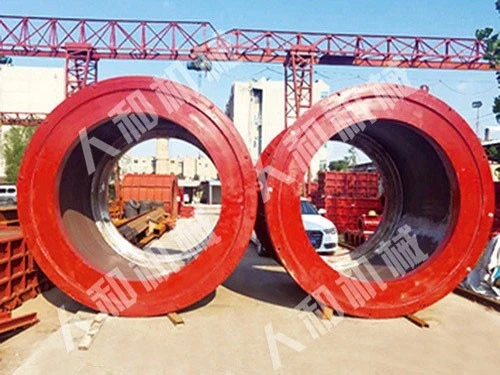
As a supplier of Cement Pipe Molds, I've witnessed firsthand the crucial role these molds play in the construction and infrastructure sectors. The standards for a cement pipe mold are multi - faceted, encompassing design, material quality, manufacturing precision, and performance in production.
Design Standards
The design of a cement pipe mold is the foundation that determines its functionality and the quality of the pipes it produces. First and foremost, the mold must have accurate dimensions. The inner and outer diameters of the mold are critical as they directly define the size of the cement pipes. For example, in municipal drainage systems, pipes need to fit precisely into existing networks. A deviation in diameter can lead to leakages, reduced flow capacity, and even system failures. Our Cement Pipe Mold is carefully designed to meet the exact specifications required by the industry, ensuring that the produced pipes are of consistent size and shape.
The shape of the mold also matters. Different applications may require pipes with specific cross - sectional shapes, such as circular, rectangular, or oval. Circular pipes are the most common due to their uniform stress distribution and efficient flow characteristics. However, rectangular pipes may be preferred in some architectural or space - constrained applications. Our design team takes these factors into account, creating molds that can produce pipes of various shapes to suit different customer needs.
The mold should have a well - thought - out structure for easy assembly and disassembly. During the pipe production process, workers need to quickly open and close the mold to insert the concrete mixture and remove the finished pipe. A complex or difficult - to - operate mold design can slow down the production process and increase labor costs. Our molds are designed with user - friendly features, allowing for seamless operation and high - efficiency production.

Material Quality Standards
The choice of materials for a cement pipe mold significantly affects its durability, performance, and the quality of the pipes it produces. High - strength steel is a popular choice for most cement pipe molds. Steel offers excellent resistance to wear and tear, as well as high - temperature resistance during the concrete curing process. The steel used in our molds is carefully selected for its purity and mechanical properties. It is heat - treated to enhance its hardness and toughness, ensuring a long service life even under heavy - duty production conditions.
In addition to the main body material, the surface treatment of the mold is also crucial. A smooth and corrosion - resistant surface finish is essential. A rough surface can cause the concrete to stick to the mold, making it difficult to remove the finished pipe and resulting in surface defects on the pipe. We apply advanced surface treatment technologies to our molds, such as electro - plating or powder coating, to provide a smooth and durable surface that minimizes adhesion and corrosion.
The quality of the materials also relates to safety. The materials used in the mold should be non - toxic and meet environmental standards. As the cement pipes are often used in water supply and drainage systems, any toxic substances leaching from the mold into the pipes can pose a threat to public health. Our molds are made from materials that comply with strict environmental and safety regulations, ensuring the health and safety of end - users.
Manufacturing Precision Standards
Precision manufacturing is the key to producing high - quality cement pipe molds. The manufacturing process involves several steps, including cutting, welding, machining, and assembly, each of which requires strict precision control.
In the cutting process, the steel plates need to be cut to the exact size and shape. Any deviation in cutting can lead to misalignment during the assembly process and affect the overall accuracy of the mold. We use advanced cutting technologies, such as laser cutting, which can achieve high - precision cuts with minimal errors.
Welding is another critical step. The welds should be strong and uniform to ensure the structural integrity of the mold. Poor welding can result in weak points in the mold, which may lead to cracks or deformation during use. Our welders are highly skilled and follow strict welding procedures to ensure the quality of the welds.
Machining operations, such as drilling, milling, and turning, are used to create the precise internal and external features of the mold. The machining accuracy directly affects the dimensional accuracy of the pipes produced. We use state - of - the - art machining equipment to ensure that the molds meet the required tolerances. For example, the tolerance for the inner diameter of our molds can be controlled within a very small range, ensuring the high precision of the produced pipes.
Performance in Production Standards
A good cement pipe mold should perform well in the actual production process. It should be able to withstand high - pressure and high - temperature conditions during concrete pouring and curing. The mold should not deform or crack under these conditions, as this can affect the quality of the pipes. Our Roller Suspension Pipe Mold is designed to handle the high - pressure forces during the roller - suspension pipe production process, ensuring stable and reliable performance.
The mold should also have a high production efficiency. It should be able to produce a large number of pipes in a short period of time without significant downtime for maintenance or repair. Our molds are designed for quick and easy cleaning and maintenance, reducing the time and cost associated with production interruptions.
In addition, the mold should produce pipes with high surface quality. The pipes should have a smooth and defect - free surface, which is not only aesthetically pleasing but also important for the functional performance of the pipes. For example, in a sewage pipe system, a smooth surface can reduce the friction of the fluid flow, preventing blockages and improving the overall efficiency of the system. Our Socket - and - Spigot Cement Pipe Mold is designed to produce pipes with high - quality sockets and spigots, ensuring a tight and leak - proof connection between pipes.
Conclusion
In conclusion, the standards for a cement pipe mold are comprehensive, covering design, material quality, manufacturing precision, and performance in production. As a Cement Pipe Mold supplier, we are committed to meeting and exceeding these standards to provide high - quality molds to our customers. Our Pipeline Mold is designed and manufactured with the latest technologies and strict quality control measures to ensure the best results in pipe production.
If you are in the market for high - quality cement pipe molds, we would love to discuss your requirements with you. Our team of experts can provide you with professional advice and customized solutions to meet your specific needs. Contact us today to start a conversation about your cement pipe mold purchasing needs.
References
- "Handbook of Concrete Pipe Manufacturing", published by a well - known industry press.
- Industry standards and regulations related to cement pipe molds, such as ASTM standards in the United States.