

When it comes to using a sewage manhole mould effectively, having the right equipment at your disposal is crucial. As a supplier of sewage manhole moulds, I've witnessed firsthand the importance of understanding the necessary tools and machinery to ensure a smooth and successful production process. In this blog post, I'll explore the kinds of equipment required for working with sewage manhole moulds, from preparation to the final product.
Preparation Equipment
Before you even start using the sewage manhole mould, some preparatory equipment is needed to get the materials and workspace ready.
Mixing Equipment
One of the first steps in creating sewage manholes is to prepare the concrete mixture. For this, you'll need high - quality mixing equipment. A concrete mixer is essential. It can be a drum mixer or a pan mixer, depending on the scale of your production. Drum mixers are commonly used for small - to medium - scale operations. They work by rotating a drum to mix the cement, aggregate, water, and any additives. Pan mixers, on the other hand, are more suitable for large - scale production. They have a more efficient mixing mechanism, which can produce a more homogenous concrete mixture in a shorter time.
Material Storage
Proper storage of raw materials is also important. You'll need silos or bins to store cement, and stockpiles or containers for aggregates like sand and gravel. These storage facilities should be designed to protect the materials from moisture, debris, and other contaminants. For example, cement silos usually have a sealed structure with a dust - collection system to prevent dust leakage during loading and unloading.
Measuring Tools
Accurate measurement of materials is key to achieving the right concrete quality. You'll need weighing scales for measuring cement, aggregates, and additives. Volumetric measuring devices can also be used for water and liquid additives. Precise measurement ensures that the concrete mixture has the correct proportions, which in turn affects the strength and durability of the sewage manholes produced.
Mould Handling Equipment
Once the concrete mixture is ready, handling the sewage manhole mould becomes the next important task.

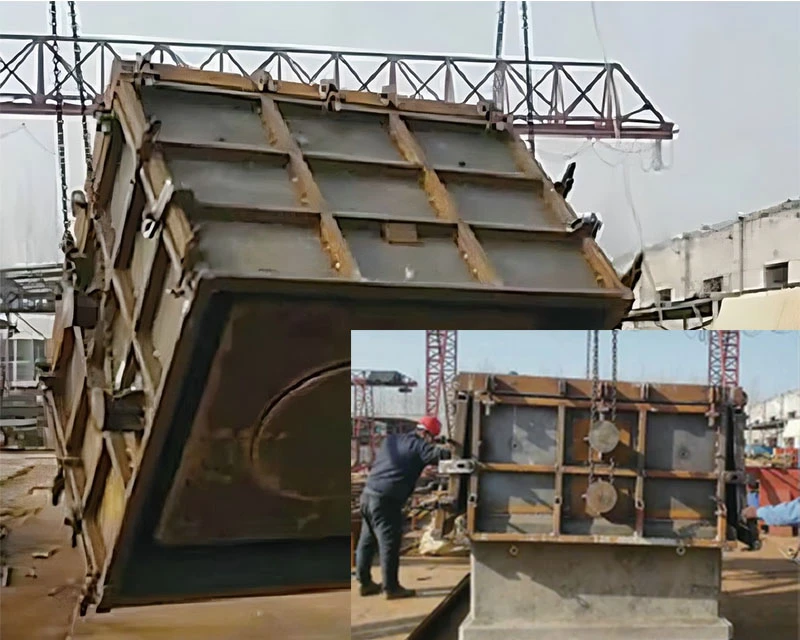
Lifting Equipment
Sewage manhole moulds can be heavy, especially large - sized ones. Lifting equipment such as cranes, forklifts, or hoists are necessary for moving the moulds around the workspace. Cranes are ideal for lifting and positioning large and heavy moulds, especially in a factory setting. Forklifts are more suitable for shorter - distance movements and are often used for transporting moulds between different workstations. Hoists can be used in situations where you need to lift the moulds vertically, for example, when placing them on a casting platform.
Mould Lubrication Equipment
To ensure easy demoulding of the sewage manholes, the moulds need to be properly lubricated. You can use spray guns or brushes for applying the mould release agent. Spray guns offer a more even and efficient application, especially for large - surface moulds. Manual brushes can be used for smaller areas or for more detailed work. The choice of lubricant also matters; it should be compatible with the mould material and the concrete used.
Alignment and Fixing Tools
During the casting process, it's important to keep the moulds in the correct position and alignment. Tools like clamps, bolts, and alignment pins are used to hold the moulds firmly in place. Clamps can be used to secure two or more parts of the mould together, while bolts and alignment pins ensure that the different sections of the mould are accurately aligned. This helps to prevent any misalignment or leakage during the concrete pouring process.
Casting and Curing Equipment
The actual casting of the sewage manholes and their subsequent curing require specific equipment.
Concrete Pouring Equipment
Concrete pumps, buckets, or conveyors are used for pouring the concrete into the sewage manhole moulds. Concrete pumps are the most efficient for large - scale production. They can transport the concrete from the mixer directly to the moulds, even over long distances and to high - elevation locations. Buckets can be used for small - scale operations or for pouring concrete into hard - to - reach areas. Conveyors are useful for continuous pouring, especially when you have a series of moulds lined up.
Vibration Equipment
Vibration is an important step in the casting process. It helps to remove air bubbles from the concrete, ensuring a more dense and strong final product. Internal vibrators, also known as poker vibrators, are commonly used. They are inserted directly into the concrete to vibrate it. External vibrators can also be attached to the outside of the mould to transfer the vibration energy to the concrete. The vibration time and intensity need to be carefully controlled to achieve the best results.
Curing Equipment
After the concrete is poured into the moulds, it needs to be cured properly to develop its full strength. Curing methods can vary, and so does the equipment. For wet - curing, you may need sprinklers or misting devices to keep the concrete moist. In some cases, curing blankets can be used to trap moisture and keep the temperature stable. For steam curing, you'll need steam generators and a sealed curing chamber. Steam curing can significantly reduce the curing time, which is beneficial for increasing production efficiency.
Other Related Equipment
There are also some other pieces of equipment that can enhance the overall production process.
Demoulding Equipment
Once the concrete has cured, demoulding the sewage manholes from the moulds is necessary. Demoulding equipment can include hydraulic jacks, pry bars, and demoulding tables. Hydraulic jacks can apply a large amount of force to separate the mould from the concrete manhole. Pry bars are useful for smaller adjustments and for breaking any adhesion between the mould and the concrete. Demoulding tables provide a stable surface for the demoulding process.
Quality Control Equipment
To ensure the quality of the sewage manholes, you'll need quality control equipment. This can include measuring tapes, levels, and hardness testers. Measuring tapes are used to check the dimensions of the manholes to ensure they meet the design requirements. Levels are used to check the flatness and alignment of the manholes. Hardness testers can be used to measure the compressive strength of the concrete, which is an important indicator of the manhole's durability.
Our Product Range and Equipment Compatibility
As a sewage manhole mould supplier, we offer a wide range of moulds to meet different customer needs. Our product range includes Well Ring Mold, Power Duct Mold, Rectangular Inspection Well Mold, Circular Inspection Well Mold, and Prefabricated Wellbore Mold.
All of our moulds are designed to be compatible with the common equipment used in the sewage manhole production process. Whether you are using large - scale industrial equipment or smaller, more portable machinery, our moulds can work seamlessly with them. We also provide technical support and guidance on the proper use of our moulds in combination with different equipment.
Contact for Purchase and Consultation
If you are interested in purchasing sewage manhole moulds or need more information about the equipment required for using them, we'd love to hear from you. Our team of experts can help you choose the right moulds for your project and provide detailed advice on the related equipment. Feel free to reach out to us for a consultation and start your journey towards efficient and high - quality sewage manhole production.
References
- Concrete Construction Handbook, Third Edition, Van Nostrand Reinhold Company
- Handbook of Industrial Concrete and Structures, Woodhead Publishing Limited
- Mould Design and Manufacturing Technology for Precast Concrete Products, Institute of Building Materials Science