

As a reputable Flume Mold supplier, ensuring the quality and performance of our products is of utmost importance. Testing strategies play a crucial role in guaranteeing that our Flume Molds meet the highest standards and fulfill the diverse needs of our customers. In this blog, we will explore the testing strategies that are suitable for Flume Molds, covering various aspects from material properties to structural integrity and functionality.
Material Testing
The quality of the materials used in Flume Molds significantly impacts their durability and performance. Therefore, material testing is the first step in our quality control process.
Chemical Composition Analysis
We conduct chemical composition analysis to ensure that the materials used in our Flume Molds meet the specified standards. By using advanced analytical techniques such as spectroscopy, we can accurately determine the chemical elements present in the materials. This helps us verify that the materials have the correct alloy composition, which is essential for the mold's strength, corrosion resistance, and other mechanical properties. For example, in steel Flume Molds, the correct carbon content is crucial for achieving the desired hardness and toughness.
Mechanical Property Testing
Mechanical property testing includes tests such as tensile testing, hardness testing, and impact testing. Tensile testing measures the maximum stress a material can withstand before breaking under tension. This test helps us determine the strength and ductility of the material. Hardness testing, on the other hand, assesses the material's resistance to indentation or scratching. A suitable hardness is necessary to ensure that the mold can withstand the pressure and wear during the manufacturing process. Impact testing evaluates the material's ability to absorb energy under impact loading, which is important for molds that may be subject to sudden shocks.
Dimensional Accuracy Testing
Dimensional accuracy is critical for Flume Molds as it directly affects the quality of the final products. We use a variety of measurement tools and techniques to ensure that the molds meet the required dimensions.
Coordinate Measuring Machine (CMM)
A Coordinate Measuring Machine (CMM) is a highly accurate measuring device that can measure the dimensions of a mold with high precision. It uses a probe to touch the surface of the mold at multiple points and records the coordinates of these points. By analyzing the data, we can determine if the mold's dimensions are within the specified tolerance range. CMMs are particularly useful for complex-shaped Flume Molds, where traditional measuring tools may not be sufficient.
Optical Measurement Systems
Optical measurement systems, such as laser scanners and vision systems, are also used for dimensional accuracy testing. Laser scanners can quickly capture the 3D shape of the mold and generate a digital model. This model can then be compared with the design specifications to identify any deviations. Vision systems use cameras to capture images of the mold and analyze the dimensions based on the image data. These systems are non-contact, which means they do not damage the mold during the testing process.
Structural Integrity Testing
The structural integrity of Flume Molds is crucial to ensure their long-term performance and reliability. We use several testing methods to assess the mold's structural integrity.
Finite Element Analysis (FEA)
Finite Element Analysis (FEA) is a computer-based simulation technique that can predict the behavior of a mold under different loading conditions. By creating a virtual model of the mold and applying various loads and boundary conditions, we can analyze the stress distribution, deformation, and other mechanical responses of the mold. FEA helps us identify potential weak points in the mold design and make necessary improvements before the actual manufacturing process.
Ultrasonic Testing
Ultrasonic testing is a non-destructive testing method that uses high-frequency sound waves to detect internal defects in the mold, such as cracks or voids. The sound waves are transmitted into the mold, and any reflections or changes in the wave pattern indicate the presence of a defect. Ultrasonic testing is a fast and effective way to ensure the structural integrity of the mold without causing any damage.
Functionality Testing
In addition to material and structural testing, functionality testing is also essential to ensure that the Flume Molds perform as intended.
Flow Testing
Flow testing is used to evaluate the flow characteristics of the material inside the mold during the manufacturing process. For example, in the case of concrete Flume Molds, we conduct flow testing to ensure that the concrete can flow smoothly through the mold and fill all the cavities. This helps us optimize the mold design and ensure the quality of the final products.
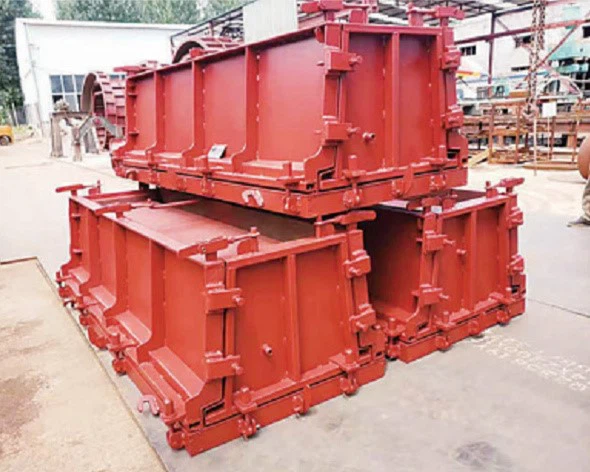

Release Testing
Release testing is performed to assess the ease of releasing the final product from the mold. A good mold should allow for easy and clean release of the product without causing any damage to the product or the mold. We use various release agents and test different release methods to ensure that the mold meets the required release performance.
Conclusion
In conclusion, a comprehensive testing strategy is essential for ensuring the quality and performance of Flume Molds. By conducting material testing, dimensional accuracy testing, structural integrity testing, and functionality testing, we can guarantee that our Flume Mold meet the highest standards and satisfy the needs of our customers.
If you are interested in our Flume Molds or other related products such as U-shaped Groove Mold and Rectangular Groove Mold, please feel free to contact us for more information and to discuss your specific requirements. We are committed to providing high-quality products and excellent service to our customers.
References
- ASTM International. (2023). ASTM Standards for Material Testing.
- ASME. (2023). ASME Codes and Standards for Mold Design and Manufacturing.
- ISO. (2023). ISO Standards for Quality Management and Testing.