

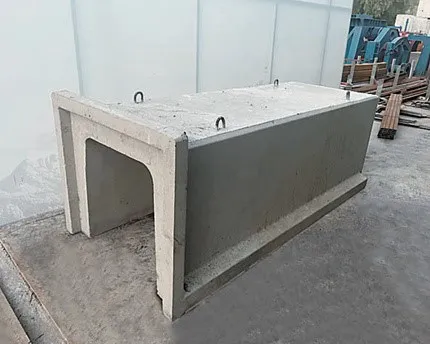
As a supplier of U-shaped Groove Molds, I've witnessed firsthand the importance of understanding the performance of different materials in the manufacturing and application of these molds. U-shaped Groove Molds are crucial in various construction and infrastructure projects, such as Farmland Irrigation Canal Mold, Canal Mold, and Flume Mold. The choice of material can significantly impact the mold's durability, cost, and the quality of the final product. In this blog, I'll explore the performance of different materials commonly used in U-shaped Groove Molds.
1. Steel Molds
Steel is one of the most popular materials for U-shaped Groove Molds. It offers several advantages that make it a top choice for many applications.
Durability
Steel is known for its high strength and excellent durability. U-shaped Groove Molds made of steel can withstand the high pressure and stress during the concrete pouring process without deforming. This means that they can be used for a large number of production cycles, making them a cost - effective option in the long run. For example, in large - scale infrastructure projects where thousands of U - shaped grooves need to be produced, steel molds can maintain their shape and dimensions accurately over time.
Precision
The machining process of steel allows for high - precision manufacturing. Steel U - shaped Groove Molds can be fabricated with very tight tolerances, ensuring that the U - shaped grooves produced have consistent dimensions and smooth surfaces. This precision is essential for applications where the fit and function of the U - shaped grooves are critical, such as in Canal Mold projects where proper water flow is required.
Resistance to Wear and Tear
Steel has good resistance to abrasion and wear. When concrete is poured into the mold, it can cause some friction and abrasion to the mold surface. Steel molds can withstand this wear much better than some other materials, which helps to maintain the quality of the surface finish of the U - shaped grooves.
However, steel molds also have some drawbacks. They are relatively heavy, which can make transportation and handling more difficult. Additionally, the initial cost of steel molds is higher compared to some other materials.
2. Plastic Molds
Plastic is another material commonly used for U - shaped Groove Molds, especially for small - scale or short - term projects.
Lightweight
One of the main advantages of plastic U - shaped Groove Molds is their lightweight nature. They are much easier to handle and transport compared to steel molds. This makes them a great choice for projects where mobility is important, such as on - site construction projects or small - scale farmland irrigation works.
Cost - Effective
Plastic molds are generally less expensive to produce than steel molds. This makes them an attractive option for projects with a tight budget. For example, in some rural Farmland Irrigation Canal Mold projects, plastic molds can provide a cost - effective solution for producing U - shaped grooves.
Good Release Properties
Plastic has good release properties, which means that the concrete U - shaped grooves can be easily removed from the mold after curing. This reduces the risk of damage to the finished product during demolding and can improve the overall production efficiency.
But plastic molds also have limitations. They are not as durable as steel molds and may deform under high - temperature conditions. They also have lower resistance to wear and tear, which means they may need to be replaced more frequently.
3. Fiberglass Molds
Fiberglass is a composite material that combines glass fibers with a resin matrix. It offers a unique set of properties for U - shaped Groove Molds.
Corrosion Resistance
Fiberglass has excellent corrosion resistance, making it suitable for use in environments where the mold may come into contact with water or corrosive substances. This is particularly important for applications such as Flume Mold projects where the molds are constantly exposed to water.
Moderate Strength and Durability
Fiberglass molds have a moderate level of strength and durability. They can withstand the pressure and stress of the concrete pouring process, but not to the same extent as steel molds. However, they are more durable than plastic molds and can be used for a reasonable number of production cycles.
Good Surface Finish
Fiberglass molds can provide a smooth and high - quality surface finish to the U - shaped grooves. This is beneficial for applications where the appearance and surface quality of the U - shaped grooves are important.
The main disadvantage of fiberglass molds is that they can be relatively expensive to produce, and they require careful handling to avoid damage to the glass fibers.
4. Aluminum Molds
Aluminum is a metal that is increasingly being used in U - shaped Groove Molds.
Lightweight and High Strength - to - Weight Ratio
Aluminum is lightweight, similar to plastic, but it has a much higher strength - to - weight ratio. This means that aluminum U - shaped Groove Molds can be strong enough to withstand the concrete pouring process while still being easy to handle and transport.
Good Thermal Conductivity
Aluminum has good thermal conductivity, which can help to speed up the curing process of the concrete in the mold. This can improve the production efficiency and reduce the overall production time.
Resistance to Corrosion
Aluminum has a natural oxide layer that provides some resistance to corrosion. This makes it suitable for use in outdoor environments where the mold may be exposed to moisture and air.
However, aluminum molds are more expensive than plastic molds and may require some special surface treatment to prevent further corrosion in harsh environments.
Considerations for Material Selection
When selecting the material for U - shaped Groove Molds, several factors need to be considered:
Project Scale
For large - scale projects with a high volume of production, steel molds may be the best choice due to their durability and long - term cost - effectiveness. For small - scale or short - term projects, plastic or fiberglass molds may be more suitable.
Budget
Budget is an important factor. If the budget is limited, plastic molds may be the most cost - effective option. However, if long - term use is expected and the budget allows, steel or aluminum molds may be a better investment.
Environmental Conditions
The environmental conditions where the mold will be used also play a role. In corrosive environments, fiberglass or aluminum molds may be more appropriate. In normal outdoor conditions, steel or plastic molds can be used depending on other factors.
Quality Requirements
If high - precision and high - quality surface finish are required, steel or fiberglass molds are better choices. For less demanding applications, plastic molds can still meet the basic requirements.
Conclusion
As a supplier of U - shaped Groove Mold, I understand that the choice of material for U - shaped Groove Molds is a crucial decision that can affect the success of a project. Steel, plastic, fiberglass, and aluminum all have their own unique performance characteristics and advantages. By carefully considering the project scale, budget, environmental conditions, and quality requirements, you can select the most suitable material for your U - shaped Groove Mold needs.
If you are in the market for U - shaped Groove Molds or other related products such as Rectangular Groove Mold, I encourage you to contact me for a detailed discussion about your requirements. We can work together to find the best solution for your project.

References
- Relevant industry standards and guidelines for mold manufacturing.
- Technical literature on materials science related to steel, plastic, fiberglass, and aluminum.
- Case studies of successful U - shaped Groove Mold applications in different projects.