

If you’ve ever stood beside a freshly finished drainage or irrigation project—water flowing smoothly without leaking, no gaps catching debris, and the shape holding perfectly through every season—you’ve probably had a small appreciation for the molds that made it possible. As a supplier of Rectangular Groove Mold systems, I spend a lot of time talking to contractors, civil engineers, and farm managers about the details that separate a mold that works once from one that delivers consistent, long-term results. One question I get more than any other is this: why does machining accuracy matter so much for a rectangular groove mold? It’s easy to assume a “groove is a groove,” but after 12 years on the manufacturing floor, I can tell you that even a 0.005-inch misalignment in your mold parts can turn into a project’s biggest headache before the first concrete is even poured.
First, let’s ground this in what a rectangular groove mold actually does, because its function dictates every accuracy requirement. Unlike U-shaped Groove Mold systems, which use curved surfaces to distribute water pressure evenly, rectangular grooves have sharp 90-degree internal and external corners, flat side walls, and a defined base. These flat surfaces are not just aesthetic—they’re structural. For farm irrigation, rectangular grooves carry consistent volumes of water to crop rows without seeping into soil that would otherwise waste moisture. For municipal drainage, they need to withstand the pressure of storm surges and the weight of heavy equipment that drives over them. And for precast concrete components, the mold is the tool that translates engineering plans into a finished part, so any error here ripples all the way to installation.
Let’s start with the most critical accuracy requirement: dimensional consistency across mating parts. A rectangular groove mold is made of multiple steel components—the side walls, end plates, base, and often a top form that defines the finished edge. Each of these parts has to fit together so tightly that when you pour concrete, no slurry leaks out. That’s not just about a neat finished part; leaking slurry creates thin spots or voids in the concrete, which weaken it over time. For most standard applications (municipal drainage ditches, small farm head canals), the tolerance for each mating surface is ±0.003 inches. Let me explain what that looks like in real terms: if your mold is supposed to form a 24-inch wide rectangular groove, each side wall has to be positioned within 0.003 inches of where it’s supposed to be. If it’s off by 0.006 inches, that might not sound like much until you calculate the volume of concrete that leaks out over a 10-foot length of mold. Suddenly you’re short on material, you have to clean up a mess on the job site, and the finished groove is narrower than planned—making it prone to clogging with leaves or sediment.
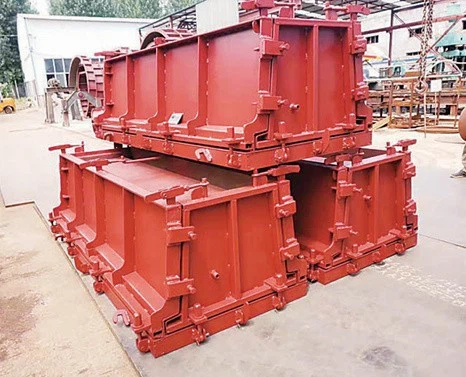
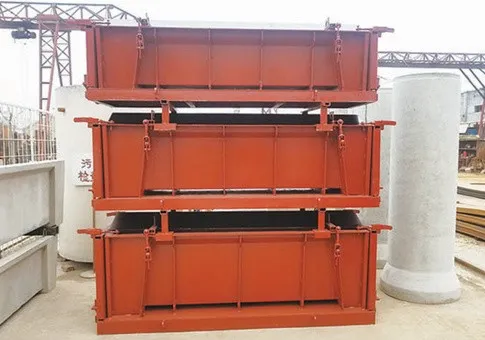
For specialized applications, like Farmland Irrigation Canal Mold systems designed for high-pressure, continuous flow, that tolerance drops even further—down to ±0.002 inches. Why? Farm irrigation grooves often run for miles, with every section joining together end-to-end. If each mold is off by just 0.004 inches, the joints between sections will have gaps that let water seep out into the ground instead of reaching the crops. Over a 1-mile stretch, that can add up to thousands of gallons of wasted water every year—not to mention the extra work it takes to adjust each section on site. I had a farmer client in central California a few years ago who switched to our molds from a cheaper, locally made alternative, and he told us that the water loss on his new irrigation system dropped by 18% in the first year. That difference came down to the consistency of our dimensional machining, nothing more.
Next, there’s flatness and straightness. A rectangular groove’s side walls and base aren’t just dimensional—they have to be perfectly flat and straight along their entire length. If a side wall is twisted by 0.01 inches over a 10-foot span, the finished concrete groove will have a warped wall, which makes it hard to align adjacent sections during installation. For precast manufacturers, that warpage means the finished part won’t fit into the project’s layout, forcing them to either rework the part or scrap it entirely—costing time and money. For in-situ molds (the kind you build on-site before pouring concrete), a warped mold side will create a groove that traps debris in the low spot, leading to clogs that require constant maintenance. The standard flatness tolerance for a rectangular groove mold is 0.002 inches per foot of length. That means if your mold is 20 feet long, the entire side wall can’t vary more than 0.04 inches from a straight line. It’s a strict requirement, but it’s non-negotiable for a groove that will hold up for 20+ years.
Corners are another area where machining accuracy makes or breaks a mold. The sharp 90-degree internal and external corners of a rectangular groove aren’t just a design choice—they’re designed to resist the abrasion of moving water, sediment, and debris. A rounded corner might be easier to machine, but it creates a weak point where cracks can form over time. To get that sharp, consistent corner, the mold’s corner inserts have to be machined to within ±0.001 inches of the correct angle. Even a 0.5-degree misangle in a corner insert can create a rounded or uneven edge on the concrete, which weakens the joint between groove sections. I once worked with a small precast shop that cut corners on corner machining, and within three months of installing their grooves, 12% of the corners had developed small cracks that required patching. That shop didn’t survive the bad word of mouth from the local contractors.
Wait, let’s compare this to other types of molds to put it in perspective. Canal Mold systems for larger waterways have slightly looser tolerances because they’re for bigger, less precise applications—their main concern is overall capacity, not the tight fit of every joint. Flume Mold systems, which are usually made of lighter materials for temporary use, also have wider tolerances because they’re not designed for repeated, long-term use. But rectangular groove molds, especially for irrigation and small drainage projects, are built to be reused hundreds (sometimes thousands) of times, and each time they’re used, they have to produce a consistent part. That’s why their accuracy requirements are so specific.
Then there’s surface finish. It’s not just about how the mold looks when it’s new—it’s about how it performs over time. The interior surfaces of a rectangular groove mold have to be machined to a Ra (roughness average) of 125 or lower. What does that mean? A rougher surface will cause concrete to stick to the mold, making it hard to remove the finished part without chipping or damaging it. Over time, that buildup can create rough spots on the concrete groove, which catch debris and lead to clogs. A smooth surface, on the other hand, lets the concrete release cleanly every time, so the mold stays in good shape longer and the finished groove has a smooth interior that water flows through easily. For molds that are used daily in precast shops, that smooth surface also reduces wear on the mold itself—so it lasts longer and delivers consistent parts for more cycles.
I’ve seen what happens when these accuracy requirements aren’t met, and it’s never pretty. Early in my career, I worked at a small mold shop that cut corners on machining to undercut competitors’ prices. We sold rectangular groove molds to three different contractors in a single quarter, and within six months, all three were calling us to complain. The grooves were leaking, the joints wouldn’t align, and the concrete was coming out with warped walls. We had to issue full refunds, and we lost most of our small-project client base because of that bad batch. That experience taught me that accuracy isn’t a “nice to have”—it’s the foundation of a mold that works.
Now, let’s talk about how these requirements translate into real manufacturing processes. When we machine our rectangular groove molds, we use 5-axis CNC mills that can hold tolerances down to ±0.0005 inches—way stricter than the industry standard. We start with precision-cut steel plates, then machine each side wall and base to within the required flatness and straightness. We use coordinate measuring machines (CMMs) to check every mating surface, every corner, and every length of the mold before it leaves our shop. That level of precision adds a small cost to each mold, but it’s a cost that pays off for our customers in the long run. A well-machined mold will produce 500+ consistent concrete grooves without needing major repairs, while a cheaper, less accurate mold might only last 100 cycles before it’s unusable.
Another factor that ties into machining accuracy is adaptability. Our customers often need rectangular groove molds for custom widths and lengths, not just standard sizes. When we machine a custom mold, we have to make sure that all the components scale perfectly—so if a customer orders a 40-foot long mold instead of 20 feet, the straightness and dimensional consistency stay the same. That’s only possible with precise machining; if you just extend a 20-foot mold by adding more parts without checking alignment, the new sections will be off, and the whole mold will be useless. We’ve had customers come to us after trying to make their own custom molds and finding that the joints between sections wouldn’t fit—they save time and money by working with a supplier who can machine custom molds to accurate tolerances from the start.
For contractors and project managers, understanding these accuracy requirements helps too. When you’re comparing rectangular groove mold suppliers, don’t just look at the price. Ask for their tolerance specifications, ask about their machining processes, and if possible, ask to see a finished groove from one of their molds. A reputable supplier will be transparent about their accuracy standards, because they know that’s what makes their product work. If a supplier can’t give you specific numbers about dimensional tolerances or flatness, that’s a red flag—chances are they’re cutting corners on machining to keep costs low.
I mentioned earlier that I’m a supplier, so I’m not going to pretend this is all altruistic. We build our molds to strict accuracy standards because we’ve seen how it helps our customers succeed, and that’s what keeps them coming back. A farmer who gets less water waste from his irrigation grooves will use us for his next project. A contractor who doesn’t have to deal with leaking or misaligned grooves will recommend us to other project managers. That’s why we invest in the best machining equipment and quality control—because it’s good for our customers, and it’s good for our business.
Let’s wrap this up with a quick summary so it’s easy to remember. The machining accuracy requirements for a rectangular groove mold aren’t arbitrary. They’re based on the function of the mold: forming concrete parts that hold water, resist pressure, and fit together correctly. Mating surfaces need ±0.002 to ±0.003 inch tolerances depending on the application. Side walls and bases need 0.002 inches per foot of flatness and straightness. Corners need ±0.001 inch angle tolerance to avoid weak points. And all interior surfaces need a Ra of 125 or lower to prevent concrete buildup.
If you’re working on a project that requires a rectangular groove mold, whether it’s for municipal drainage, farm irrigation, or precast components, the accuracy of the mold you choose will make all the difference. Don’t settle for a mold that’s machined to loose tolerances just because it’s cheaper. A high-quality, accurately machined rectangular groove mold will save you time, money, and headaches over the life of your project.
If you’re ready to get a rectangular groove mold for your next project, or if you have questions about our machining processes, we’re here to help. We can provide custom molds tailored to your project’s specific needs, with full transparency about our accuracy standards and quality control processes. Reach out to our team to discuss your requirements and get a quote.
References
- American Concrete Institute. (2019). Standard Practice for Concrete Formwork. ACI 347-19. Farmington Hills, MI: American Concrete Institute.
- Mold Making & Casting Journal. (2021). "Accuracy Standards for Precast Concrete Molds." Vol. 45, No. 2, pp. 18-22.
- Irrigation Association. (2020). Design and Installation Guidelines for Farm Irrigation Systems. Reston, VA: Irrigation Association.
- Society of Manufacturing Engineers. (2022). Machining Tolerances and Geometric Dimensioning. Dearborn, MI: SME.