

Hey there! As a supplier of rainwater pipe molds, I often get asked about the die - opening time for these molds. It's a crucial aspect that can significantly impact the production process of rainwater pipes. So, let's dive right into it.
What Factors Affect Die - Opening Time?
The die - opening time for a rainwater pipe mold isn't a one - size - fits - all value. It depends on several factors.
Material of the Pipe
The type of material used to make the rainwater pipe plays a huge role. For example, if we're using PVC (Polyvinyl Chloride), it generally has a shorter curing time compared to cement. PVC is a thermoplastic, which means it can be melted and reshaped. Once it's injected into the mold, it cools relatively quickly. Usually, for a standard PVC rainwater pipe mold, the die - opening time can be as short as 5 - 10 minutes.
On the other hand, cement pipes take much longer. Cement needs time to set and harden through a chemical reaction called hydration. The die - opening time for a cement rainwater pipe mold can range from a few hours to even a day, depending on the mix design, temperature, and humidity.
Mold Design
The design of the rainwater pipe mold also affects the die - opening time. A simple, straightforward mold design will allow for quicker cooling and release of the pipe. For instance, a Mold for Plain - ended Cement Pipe is relatively easier to open compared to a mold with complex socket and spigot designs.
The Mold for Socket and Spigot Cement Pipe has more intricate details. The socket and spigot parts need to fully form and harden before the mold can be opened. This can add extra time to the die - opening process, maybe an additional 30 minutes to a couple of hours depending on the material and other conditions.
Temperature and Humidity
Environmental conditions are key. Higher temperatures can speed up the curing process for both PVC and cement. In a hot and dry environment, a PVC pipe might cool and solidify faster, reducing the die - opening time. For cement pipes, warmer temperatures can accelerate the hydration process.
However, if it's too hot and dry, the cement might dry out too quickly, leading to cracks. On the other hand, in a cold and humid environment, the curing process slows down. For cement pipes, the die - opening time can be extended by several hours or even days in extreme cold and high - humidity conditions.
Typical Die - Opening Times
Let's break down the typical die - opening times for different types of rainwater pipe molds.
PVC Rainwater Pipe Molds
As I mentioned earlier, PVC pipes have a relatively short die - opening time. For small - diameter PVC rainwater pipes (say, up to 100mm), the die - opening time can be around 5 - 10 minutes. This is because PVC cools rapidly once it's injected into the mold.
For larger - diameter PVC pipes (200mm or more), the die - opening time might increase to 15 - 20 minutes. The larger the pipe, the more time it takes for the heat to dissipate and the plastic to solidify evenly.
Cement Rainwater Pipe Molds
Cement pipes are a different story. For a Rainwater Pipeline Mold used to make plain - ended cement pipes, under normal temperature and humidity conditions (around 20 - 25°C and 50 - 60% humidity), the die - opening time is usually around 4 - 6 hours.
If we're talking about socket and spigot cement pipes, the die - opening time can be 6 - 8 hours or more. This is because the socket and spigot parts need to be fully formed and hardened to ensure a proper fit when the pipes are installed.
Importance of Correct Die - Opening Time
Getting the die - opening time right is super important. If you open the mold too early, the pipe might not have fully solidified. For PVC pipes, this can lead to deformation. The pipe might not hold its shape properly, and it could have uneven walls.
For cement pipes, opening the mold too early can cause the pipe to crack or break. The cement needs enough time to gain sufficient strength to maintain its shape and integrity.
On the other hand, if you wait too long to open the mold, it can slow down the production process. This means you'll produce fewer pipes in a given time, which can affect your bottom line.
How to Determine the Right Die - Opening Time
There are a few ways to figure out the correct die - opening time for your rainwater pipe mold.
Testing
One of the best ways is to conduct tests. Make a few sample pipes and try opening the mold at different times. Check the quality of the pipes. If they're well - formed and have the right strength, you've found the sweet spot.
Monitoring
You can also use sensors to monitor the temperature and hardness of the pipe inside the mold. For PVC pipes, you can use infrared sensors to measure the surface temperature. Once the temperature drops to a certain level, it's a good indication that the pipe is ready to be removed from the mold.
For cement pipes, you can use a penetrometer to measure the hardness of the cement. When the cement reaches a specific hardness value, it's time to open the mold.

Conclusion
In conclusion, the die - opening time for a rainwater pipe mold depends on various factors such as the material of the pipe, mold design, and environmental conditions. PVC pipes generally have a shorter die - opening time compared to cement pipes.
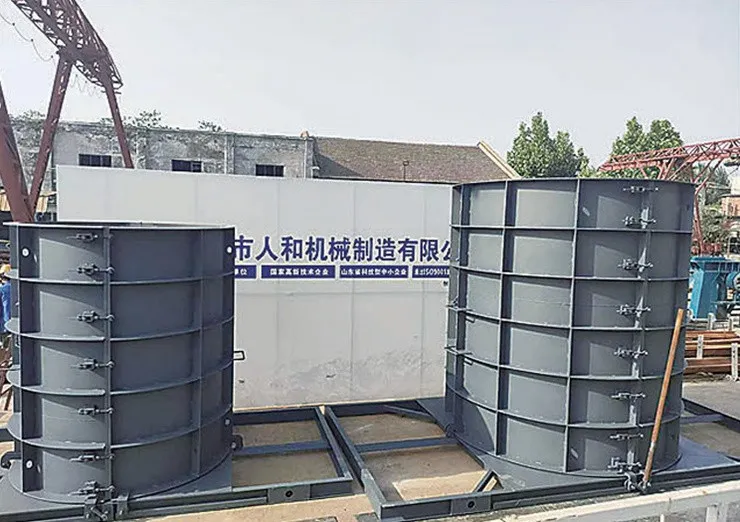
As a rainwater pipe mold supplier, I understand the importance of getting this right. If you're in the business of producing rainwater pipes and need high - quality molds, feel free to reach out. We can discuss your specific requirements and help you find the best mold for your production needs. Whether it's a Mold for Socket and Spigot Cement Pipe, a Mold for Plain - ended Cement Pipe, or a Rainwater Pipeline Mold, we've got you covered.
References
- "Plastic Pipe Extrusion: Principles and Practice" by John V. Koleske
- "Concrete Pipe Engineering Handbook" by American Concrete Pipe Association