

As a supplier of cable trench molds, I often encounter questions from customers about the roughness of these molds. Understanding the concept of roughness in cable trench molds is crucial for both manufacturers and users. In this blog post, I will delve into what the roughness of a cable trench mold means, its significance, and how it impacts the final product.
What is Roughness in a Cable Trench Mold?
Roughness in a cable trench mold refers to the irregularities on the surface of the mold. These irregularities can be microscopic or visible to the naked eye, and they are measured in terms of the height and spacing of the peaks and valleys on the mold's surface. The roughness of a mold is typically quantified using parameters such as Ra (arithmetical mean deviation of the assessed profile) and Rz (maximum height of the profile).
The surface roughness of a cable trench mold is influenced by several factors, including the manufacturing process, the material used, and the finishing treatments applied. For example, molds made from high - quality steel and subjected to precision machining and polishing tend to have lower roughness values compared to those made from lower - grade materials or with less precise manufacturing methods.
Significance of Roughness in Cable Trench Molds
Impact on the Quality of the Cable Trench
The roughness of the mold directly affects the surface finish of the cable trench produced. A smooth mold surface will result in a cable trench with a smooth and even surface, which is not only aesthetically pleasing but also has practical benefits. A smooth surface reduces the risk of damage to cables during installation and maintenance, as there are fewer sharp edges or protrusions that could potentially cut or abrade the cable insulation.
Release of the Concrete
Roughness also plays a crucial role in the release of the concrete from the mold. A mold with an appropriate level of roughness allows for easy separation of the concrete cable trench from the mold without causing damage to either the mold or the cable trench. If the mold is too smooth, the concrete may stick to the mold, making it difficult to remove the cable trench. On the other hand, if the mold is too rough, it can cause surface defects on the cable trench during the demolding process.
Durability of the Mold
The roughness of the mold can impact its durability. A mold with a well - controlled roughness is less likely to experience wear and tear during repeated use. A smooth surface may be more prone to scratching and damage, while a rough surface that is too irregular can lead to stress concentrations, which may cause the mold to crack or deform over time.
Types of Cable Trench Molds and Their Roughness Considerations
Arched Cable Trench Mold
The Arched Cable Trench Mold has a unique arched shape, which requires a specific level of surface roughness. The arch design can make it more challenging to achieve a uniform surface finish. The roughness of the arched mold needs to be carefully controlled to ensure that the concrete flows evenly during the casting process and that the final cable trench has a smooth and consistent arch shape. A smooth surface on the arched mold is essential for preventing air pockets and ensuring a high - quality finish.
Rectangular Cable Trench Mold
The Rectangular Cable Trench Mold is one of the most common types of cable trench molds. For rectangular molds, the roughness should be uniform across all surfaces. This uniformity helps in producing cable trenches with straight and smooth walls. A consistent roughness also ensures that the concrete is evenly distributed during the casting process, resulting in a cable trench with consistent dimensions and a high - quality surface finish.

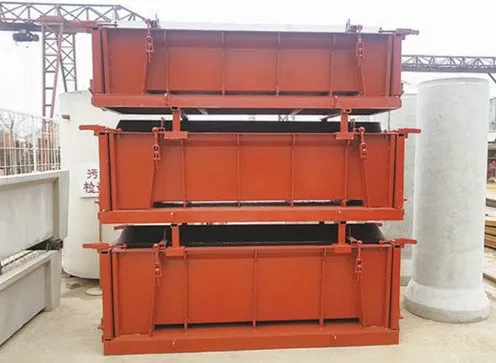
Cast - in - Place Cable Trench Mold
The Cast - in - Place Cable Trench Mold is used for creating cable trenches directly on - site. The roughness of this type of mold is particularly important as it needs to withstand the on - site casting conditions. A mold with the right roughness can help in achieving a good bond between the concrete and the mold, while also allowing for easy removal of the mold after the concrete has cured.
Controlling the Roughness of Cable Trench Molds
To control the roughness of cable trench molds, manufacturers use a variety of techniques. Precision machining is one of the most important methods. By using advanced machining tools and techniques, manufacturers can achieve a high level of surface accuracy and control the roughness to within a specific range.
Surface finishing treatments such as polishing, grinding, and coating can also be used to modify the roughness of the mold. Polishing can reduce the surface roughness, making the mold smoother. Grinding can be used to remove any large irregularities and create a more uniform surface. Coatings can be applied to the mold surface to provide additional protection and control the surface properties, including roughness.
Measuring the Roughness of Cable Trench Molds
There are several methods for measuring the roughness of cable trench molds. One of the most common methods is using a profilometer, which measures the surface profile of the mold. The profilometer provides detailed information about the height and spacing of the peaks and valleys on the mold surface, allowing manufacturers to accurately quantify the roughness.
Optical measurement techniques can also be used to measure the roughness of the mold. These techniques use light to scan the surface of the mold and create a three - dimensional image of the surface, which can be analyzed to determine the roughness parameters.
Conclusion
In conclusion, the roughness of a cable trench mold is a critical factor that affects the quality, durability, and performance of the cable trenches produced. As a supplier of cable trench molds, we understand the importance of controlling the roughness to meet the specific requirements of our customers. Whether it is an Arched Cable Trench Mold, a Rectangular Cable Trench Mold, or a Cast - in - Place Cable Trench Mold, we strive to provide molds with the optimal level of roughness.
If you are in the market for high - quality cable trench molds, we invite you to contact us for a detailed discussion. Our team of experts is ready to assist you in selecting the right mold for your project and ensuring that it meets your specific requirements.
References
- ASTM D4417 - 15 Standard Test Methods for In - Place Density and Water Content of Soil and Soil - Aggregate by Nuclear Methods (Shallow Depth).
- ISO 4287:1997 Geometrical Product Specifications (GPS) - Surface texture: Profile method - Terms, definitions and surface texture parameters.