

If you’ve ever worked in construction, irrigation, or infrastructure, you know that small, durable tools make all the difference. Today, I’m breaking down a question I get all the time from clients, contractors, and even small farm owners: how long does a rectangular groove mold actually last? As a supplier of these molds, I’ve seen them hold up for years in all kinds of conditions, but there’s no one-size-fits-all answer—so let’s get into the real, science-backed details.
First off, what even is a rectangular groove mold? If you’re here, you probably know, but just to keep it clear: these are the forms you use to pour concrete (or sometimes plastic, depending on the project) into straight, rectangular drainage or irrigation grooves. Think about the gutters along a road that carry rainwater away, or the small channels that water crops on a farm. The mold is what shapes that concrete into the exact size and angle you need. You can check out my go-to options here if you’re looking for a reliable one: Rectangular Groove Mold.
Now, let’s talk lifespan. I’ve had clients tell me their molds lasted 5 years, others say 15, and a few have even mentioned using the same one for 20 years. The biggest factors? What the mold is made of, how it’s used, and how you take care of it. Let’s dive into each of these because they’re not just random details—they make a huge difference.
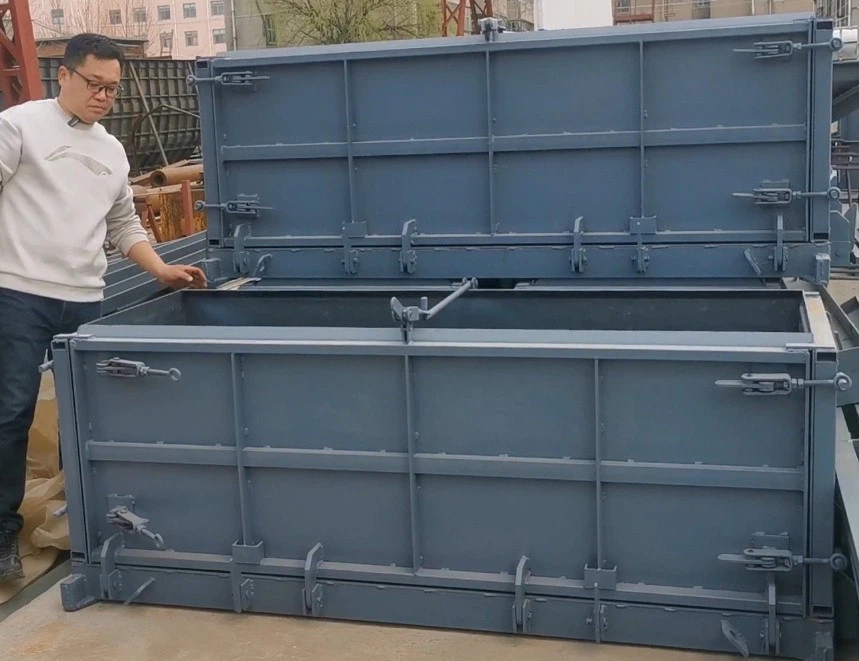

First, material. Most quality rectangular groove molds are either made of high-grade steel, fiberglass-reinforced plastic (FRP), or aluminum. Let’s break each down:
Steel molds are the workhorses. They’re heavy, solid, and can handle tons of pressure—like when you’re pouring thick concrete or working on heavy-duty road drainage. But steel rusts if you don’t take care of it. I’ve seen a steel mold get ruined in 2 years just because a contractor left it out in the rain all winter, no oil or protective coating. But when maintained right? A good steel rectangular groove mold can last 10 to 20 years, sometimes even longer. A lot of large construction companies swear by steel for that exact reason—they invest once and use it for dozens of projects.
FRP molds are lighter, which is a big plus if you’re moving them around a farm or small job site. They don’t rust, so they’re great for places with lots of moisture or humidity. But they’re not as tough as steel. If you drop them, or scrape them on hard ground when setting up, they can get cracks or chips. For light to medium use—like small farm irrigation, or residential drainage—FRP molds usually last 5 to 10 years. I’ve had a few small farm owners tell me their FRP molds are going strong after 8 years, as long as they don’t haul them roughly.
Aluminum molds are middle-of-the-road. They’re lighter than steel, stronger than FRP, and don’t rust (or rust way slower than steel). They’re popular for medium-sized projects—like small community drainage ditches, or medium farm irrigation. Their lifespan is usually 7 to 12 years. I always tell clients aluminum is a good balance if you need durability without the weight of steel.
Next, usage intensity. This is a big one that a lot of people overlook. How often are you using the mold? If you’re a big contractor pouring 500 linear feet of grooves every month, that’s way more wear than a farm owner who pours a few small channels once a year. For heavy daily use—like a commercial construction crew—even a steel mold might only last 5 to 7 years, because every pour wears down the edges a little, and repeated lifting and moving adds stress. For light, sporadic use—like a homeowner or small farm—you can get 15+ years out of the same mold, no matter the material, as long as you take care of it.
Then there’s project conditions. Where are you using this mold? If you’re working in a place with super cold winters, where the ground freezes and thaws, that expansion and contraction can put stress on the mold. Or if you’re working in a salty area—like near a coast, where saltwater or road salt gets on the mold—that can eat away at steel over time. I have a client in Florida who uses steel molds, but he has to sand them and reapply a protective coating every year because of the salt air. If he skipped that, his molds would only last 3 or 4 years. On the flip side, if you’re working in a dry, temperate area with not much moisture, molds hold up way better.
But wait—usage isn’t just about frequency. It’s also about how you use the mold itself. Are you dropping it when you carry it from the truck? Are you prying concrete out of it with a crowbar instead of using a rubber mallet (which is the right move, by the way)? Are you over-tightening the clamps, which can bend the edges? All of these small things add up. I once had a client who was a new contractor, and he bent a steel mold’s corner on his first job. Instead of taking 10 minutes to fix it, he kept using it, and the bend got worse until the mold wouldn’t hold concrete right. He ended up replacing it in a year, even though it was a high-quality steel mold.
Now, the care part. This is the single biggest thing that extends mold lifespan, no matter what material it’s made of. I can’t stress this enough—good care can double or even triple how long your mold lasts. Let’s go over the basics I tell every client:
-
Clean it right after every use. Concrete is cement, which hardens if you let it sit. If you leave a little concrete inside the mold after a pour, it will build up, making the next groove uneven, and over time, it can crack the mold. The best way is to pressure wash it right away (on a medium setting—don’t blast it too hard, that can damage edges) or use a stiff brush and water for smaller molds. For steel molds, a little mild detergent works too, but make sure to rinse it well.
-
Dry it completely before storing. If you leave a wet mold, especially steel, it will rust. I see this all the time—contractors stack molds in a corner, still damp from the job, and come back in spring to find rust spots all over. For steel, after drying, you can spray a thin layer of penetrating oil or a specialized mold release agent (not the kind you use on concrete, wait—use one made for molds) to keep moisture away. For FRP or aluminum, just make sure it’s dry, and maybe cover it with a tarp if it’s stored outside.
-
Store it properly. Don’t just toss molds on the ground where they’ll get rained on, or where equipment can run over them. Stack them neatly, with a little space between each one so air can circulate. If you have long rectangular molds, lay them flat instead of standing them on end—standing them up can make them bend over time, especially steel or aluminum ones.
-
Make small repairs right away. If you have a small scratch on steel, a chip on FRP, or a bent edge on aluminum, fix it before it gets worse. For scratches on steel, sand them down and reapply a protective coat. For small chips on FRP, you can use a fiberglass repair kit. Bent edges? Most of the time, you can bend them back with a rubber mallet—no need to buy a whole new mold.
Now, let’s talk about real examples from my own experience. I had a regular client named Mike who runs a large farm in the Midwest. He bought two steel rectangular groove molds from me back in 2008. He uses them twice a year, for planting and harvest irrigation. He cleans them every time, stores them in a dry shed, and does minor repairs when he needs to. Last year, he told me they’re still working perfectly, 15 years later. Compare that to another client, a small construction company in Texas, who bought a cheaper steel mold from another supplier 6 years ago. They use it almost every week for road drainage jobs. They leave it out in the sun and rain all winter, never clean it well. It’s now so rusted and bent that they have to replace it. That’s a difference of 15 years vs. 6 years—all from care.
Wait, but what about other types of molds? I get asked about U-shaped and flume molds too, and while they’re not rectangular groove molds, a lot of clients cross-shop them. You can check out the U-shaped ones here: U-shaped Groove Mold, or flume molds here: Flume Mold. The same rules apply to most drainage canal molds—material, usage, and care matter across the board. Even canal molds for big projects follow the same lifespan patterns, just on a larger scale.
Is there a way to calculate a rough lifespan for your mold? Let’s do a quick formula (I like simple math, no complicated engineering stuff here). Take the base lifespan for your material: 10 years for steel, 7 for aluminum, 5 for FRP. Then adjust based on usage: if you use it every day, cut that number in half; if you use it once a year, double it. Then adjust for care: if you clean and store it well, add 5 years; if you neglect it, subtract 5 years. That gives you a rough idea. For example: steel mold, daily use, poor care: 10 / 2 -5 = 0? No, wait, minimum lifespan is always at least 2-3 years, so that’s just a floor. Steel mold, annual use, good care: 10 *2 +5 =25 years, which is possible if you take really good care of it.
Now, what about when a mold needs replacing? You don’t have to wait for it to fall apart. Signs it’s time for a new one: edges are so bent or chipped that you can’t get a straight groove, the mold has cracks that concrete leaks through, or it’s gotten too heavy (if you’re using FRP and it’s weakened). If you’re noticing your finished grooves are uneven, or you’re having to use extra force to pour concrete, that’s a sign it’s time.
I also want to mention that investing in a good quality rectangular groove mold is worth it in the long run. A cheap mold might cost $200 less upfront, but if it only lasts 3 years, that’s $200 a year. A quality steel mold might cost $800, but if it lasts 15 years, that’s only $53 a year. That math adds up fast. A lot of small business owners and farmers skip the good mold and end up buying 3 cheap ones, which is way more expensive over time.
Wait, and for farm owners specifically—farmland irrigation canal molds, like the ones here: Farmland Irrigation Canal Mold, are often used in wet, outdoor conditions, so their lifespan is a little shorter than regular molds if you don’t take care of them. But if you dry them and store them after each use, they’ll last a long time. I have a client with a 100-acre farm who uses a set of our FRP farm irrigation molds, and they’ve been going strong for 9 years now.
Another thing: weather conditions that are extreme—like very high temperatures, or places with lots of UV exposure (like desert areas)—can affect FRP molds over time. UV rays break down the fiberglass, so FRP molds in the desert might only last 4-6 years, whereas in a shady, mild area, they last 8-10. Steel molds, though, UV doesn’t affect them much as long as they’re coated.
I’ve also had clients ask if there’s a mold that lasts forever. No, sorry, even the best steel mold will wear out eventually. The edges will get rounded from hundreds of pours, or the metal will thin out, or it will get damaged beyond repair. But with good care, you can get way more out of it than you might think.
Now, if you’re in the market for a rectangular groove mold, or any drainage canal mold, I’ve got options for every need. Whether you need a small one for a farm, a heavy-duty one for road construction, or something in between, check out my selection here: Canal Mold. All my molds are made with high-quality materials, and I always send a care guide with every purchase—so you can get the maximum lifespan out of yours.
At the end of the day, the lifespan of a rectangular groove mold isn’t set in stone. It depends on what you put into it—both in the initial investment and the care you give it. A well-maintained, quality mold will save you time, money, and hassle for years, while a cheap, neglected one will need replacing every few years. If you have more questions about choosing the right mold, or how to care for yours, feel free to reach out. I’m always here to help contractors, farmers, and builders make the right choice for their projects.
References:
- American Concrete Institute. (2019). "Materials, Design, and Construction of Concrete Drainage Structures". ACI 304R-19, Farmington Hills, MI.
- Mold Maintenance Association. (2021). "Best Practices for Extending the Service Life of Concrete Form Molds". MMA Technical Bulletin 04-21.
- National Association of Construction Equipment Distributors. (2020). "Durability and Lifespan of Construction Formwork Materials: Steel, Aluminum, and FRP". NACED Industry Report, Chicago, IL.
- U.S. Department of Agriculture. (2018). "Irrigation Infrastructure Maintenance Guide for Small and Medium-Sized Farms". USDA Agricultural Handbook No. 732, Washington, DC.